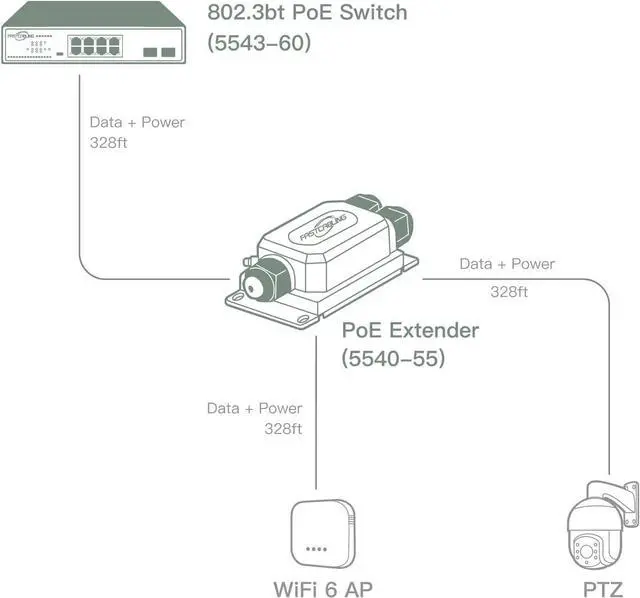
The power will lose and be converted into the heat in PoE system. The longer the cable, the more power loss will come up. Choosing the pure copper type cat5e/cat6 but not CCA type is critical to reduce the power loss in long running POE system.
The remaining power budget doesnt equal to the power from PoE switch. The power loss needs to be considered. While working with high power PoE++ devices such as some WiFi 6 access points, infrared PTZ camera, the 60W PoE extension may be needed.
The surge could be absorbed by the cat5e/cat6 cable and transmitted to both ends. Grounding the PoE injector as well as the edge device can introduce the surge to the ground and protect your system from damage by the surge impact.
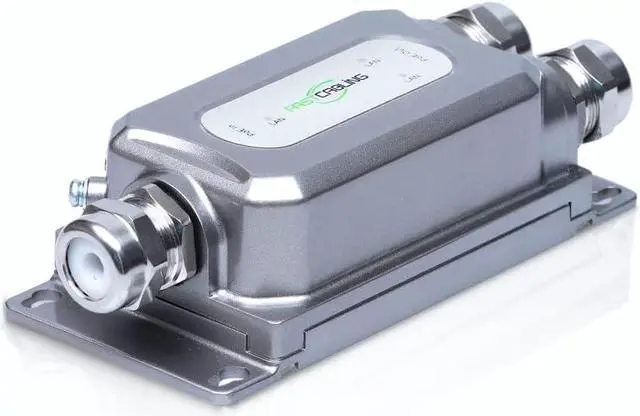
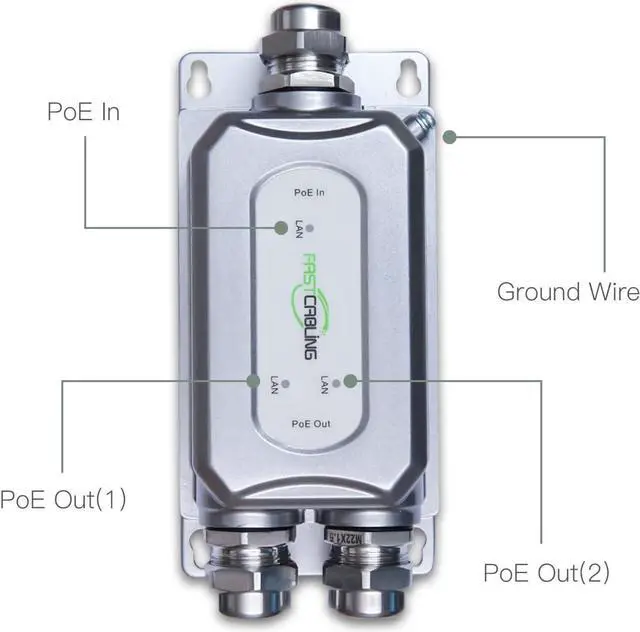
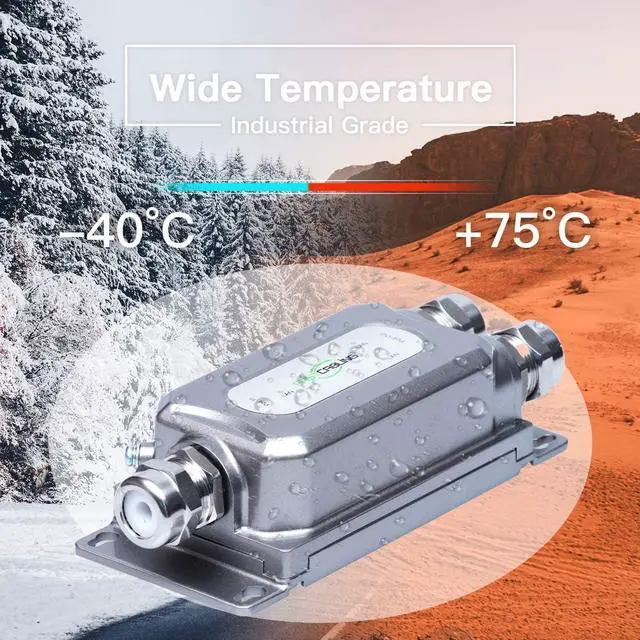
Number of Ports 1 port PoE in, 2 ports PoE out Data Rate 10/100/1000 BaseTX Transmission Media 10BaseT Cat. 5 UTP 100BaseTX Cat. 5 UTP 1000BASE-TX: UTP category5e cable Standard IEEE802.3af, IEEE802.3at, IEEE802.3bt (PoE input only) PoE Input 1/2(-), 3/6(+) or 7/8(-), 4/5(+) or 4 pair for IEEE802.3bt PoE Output 1/2(-), 3/6(+) Max. Power Output Single Port 30W/60W Connectors Shielded RJ45, EIA 568A and 568B Network Cables Shielded category 5 (or higher) Waterproof Rating IP67 Vandal Proof IK10 Surge Protection Differential mode±4KV, Common mode±6KV Operating Temperature -40°C ~ 75°C Storage Temperature -40°C ~ 80°C Humiditye 10 to 90% RH (non-condensing)



 All Categories