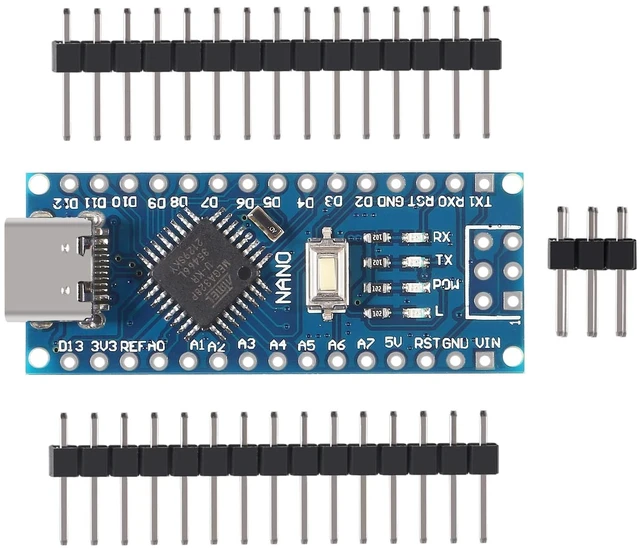
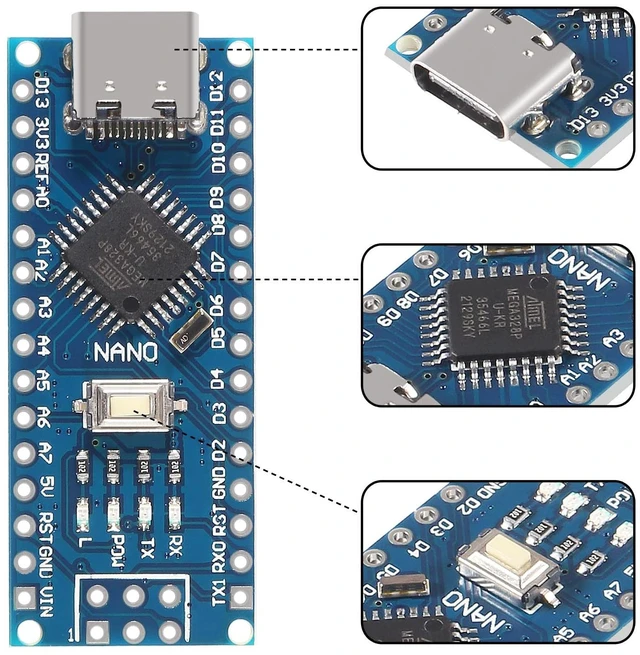
The Nano for arduino can be powered via the Mini-B USB connection, 6-20V unregulated external power supply (pin 30), or 5V regulated external power supply (pin 27). The power source is automatically selected to the highest voltage source ^^ The nano has 8 analog inputs, each of which provide 10 bits of resolution. By default they measure from ground to 5 volts, though is it possible to change the upper end of their range using the analogReference function. Analog pins 6 and 7 cannot be used as digital pins, some pins have specialized functionality ^^ It is a smallest, complete and breadboard friendly board.
It has everything that board has (electrically) with more analog input pins and on board +5V AREF jumper, compatible with Windows, Mac and Linux operating system.
^^ More Breadboard Space: Nano's got the breadboard-ability of the Mini USB with smaller footprint than either, so users have more breadboard space. It's got a pin layout that works well with the Mini or the Basic Stamp (TX, RX, ATN, GND on one top, power and ground on the other ^^ This board is using the chips ATmega328P and CH340, not FT232, Support ISP download; Support USB download and Power