


 All Categories
Built for How Business Buys.
All Categories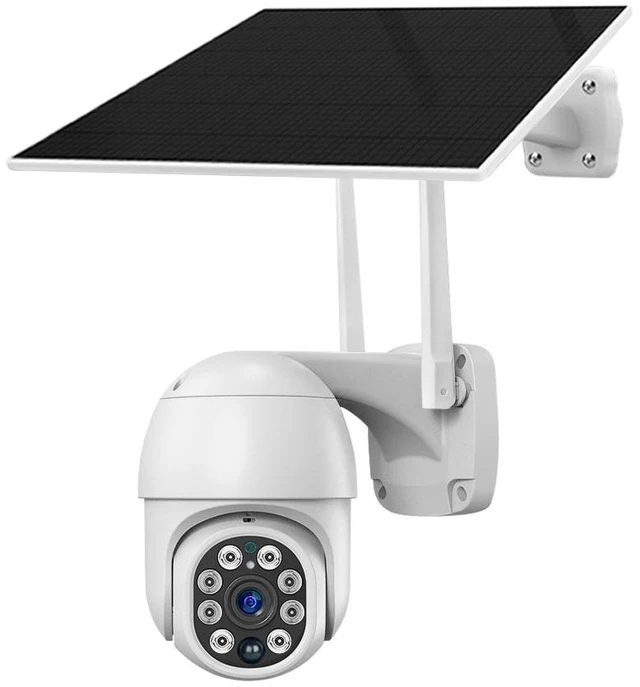
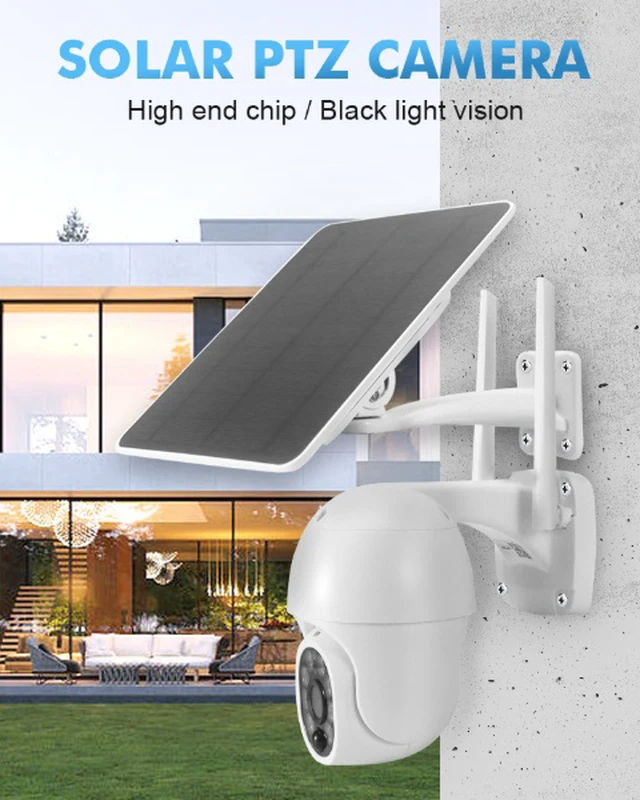
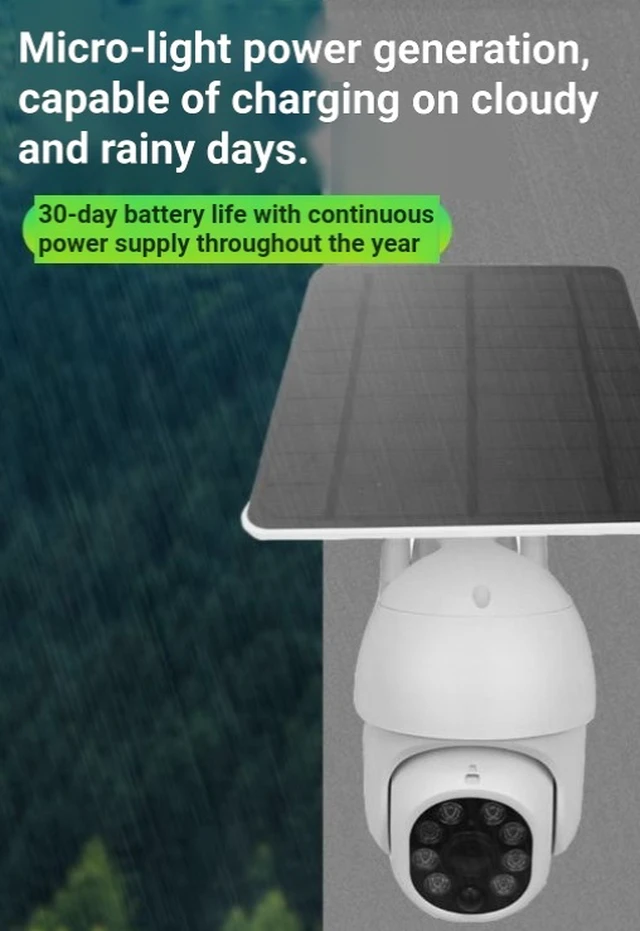
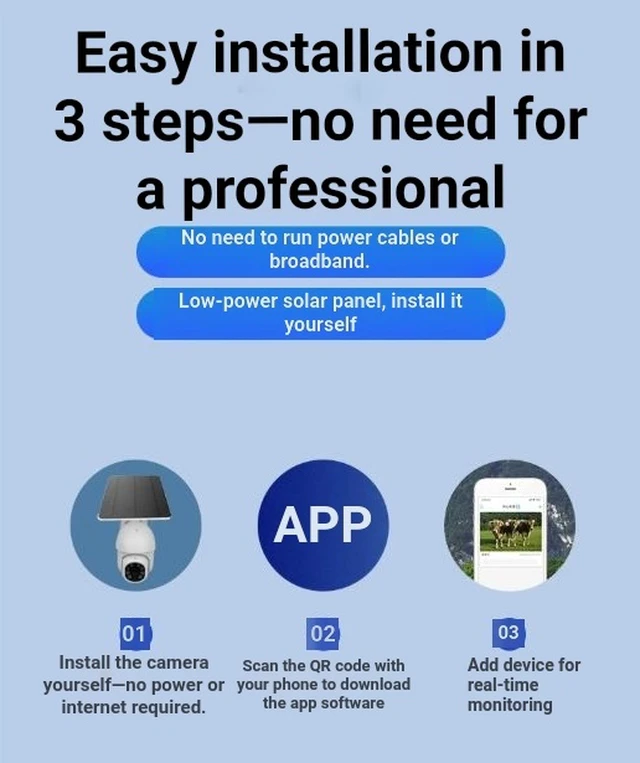


The reason a solar camera exists is that most outdoor spaces do not have a socket. To put a normal camera on a gate, a barn, a paddock, a drive or a half-finished building site you need mains power run outside, a network cable or a 4G plan, a weatherproof junction box, and usually a permit or an electrician. A solar unit with a built-in battery deletes all of that: it is mounted, it is paired to your Wi-Fi, and it runs off the sun. This one is a 3MP model, which is the practical step up from 1080p outdoors. At indoor distances you cannot tell the difference. At thirty feet across a yard, 3MP is what turns "a person" into a jacket colour and a build, and turns "a vehicle" into something a plate can be read off. The lens is fixed focus with no optical zoom, and it is offered in 4 mm and 8 mm variants: 4 mm covers a wider area like a driveway or gate, 8 mm throws further down a fence line, a long drive or a piece of equipment. Pick the lens for the distance you actually need to see, not for the number that sounds better. Night vision is infrared with an IR-CUT filter that switches automatically. After dark the camera runs on IR; in daylight the filter goes back in so colours do not drift. There is no moving zoom mechanism and no optics to knock out of alignment, which is the honest advantage of the fixed-lens build: far less to go wrong on a bracket ten feet up. Storage is a microSD card in the camera, so recordings stay on hardware you own and you can review them in the app without a subscription. The Tuya Smart / Smart Life app handles live view, playback, alerts and sharing with other accounts. One thing to understand before you buy, because it is where solar cameras disappoint people. This is a battery-powered device, so it is designed to wake and record when something happens rather than to record 24 hours straight. Continuous recording is what flattens solar batteries. If you need an unbroken 24/7 timeline, run a wired camera or a PoE camera instead; if you need to know who came and when, this is the right kind of tool. Install it where the panel gets real sun, not shade under an eave or facing north is how these cameras die in winter and check the Wi-Fi signal at the mounting point before you commit to the position. Weak signal at the pole means offline camera, no matter what the spec sheet says. Point it at your own property. Do not aim it into a neighbour's windows or a public footpath beyond your boundary, and check the recording and audio consent rules that apply where you live.
