


 All Categories
Built for How Business Buys.
All Categories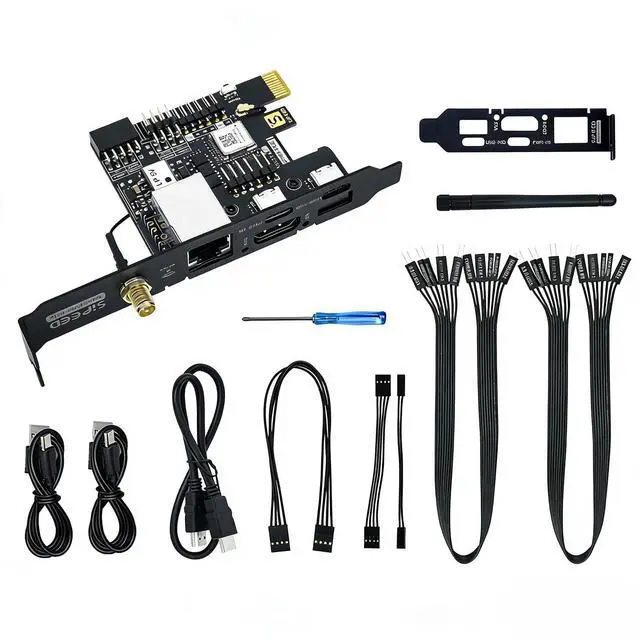
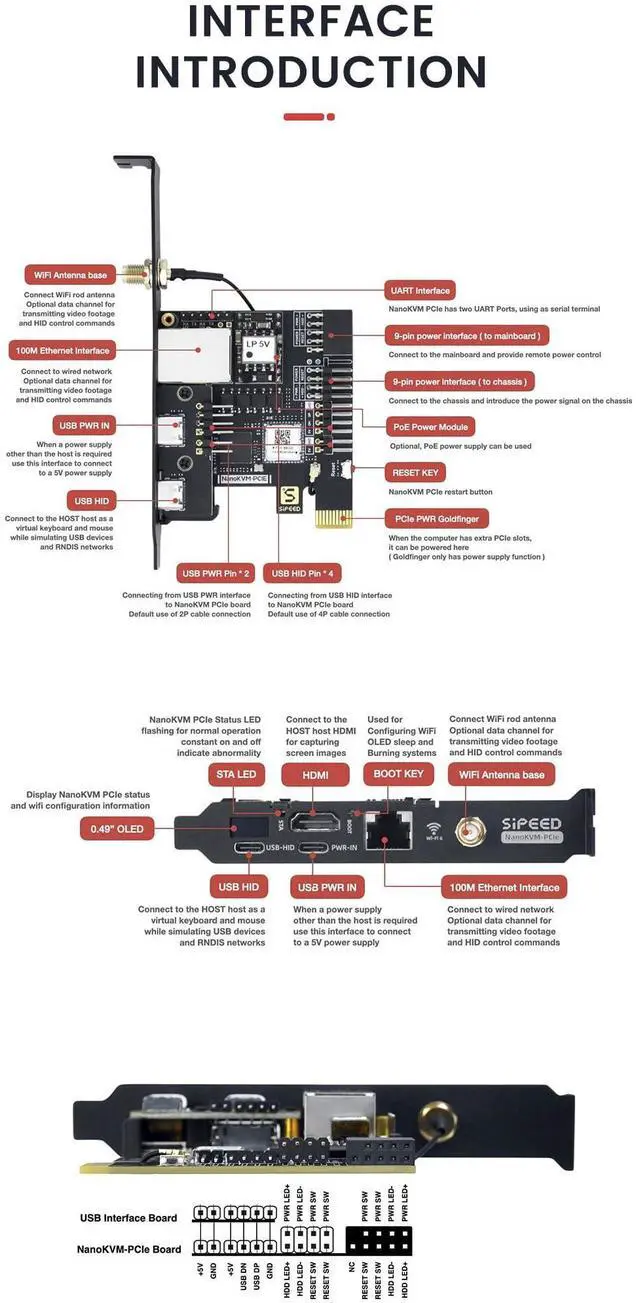


-Introduction-
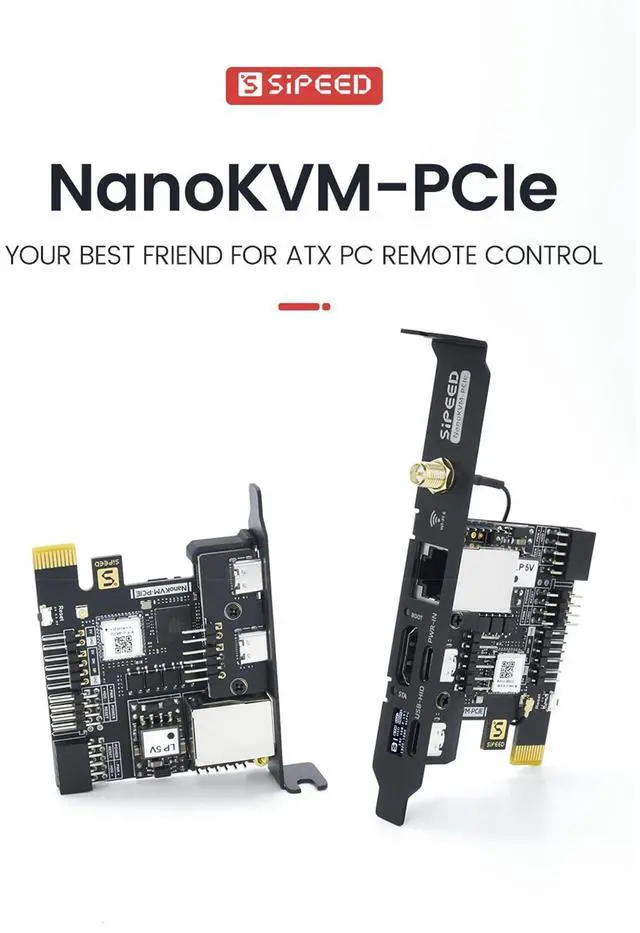
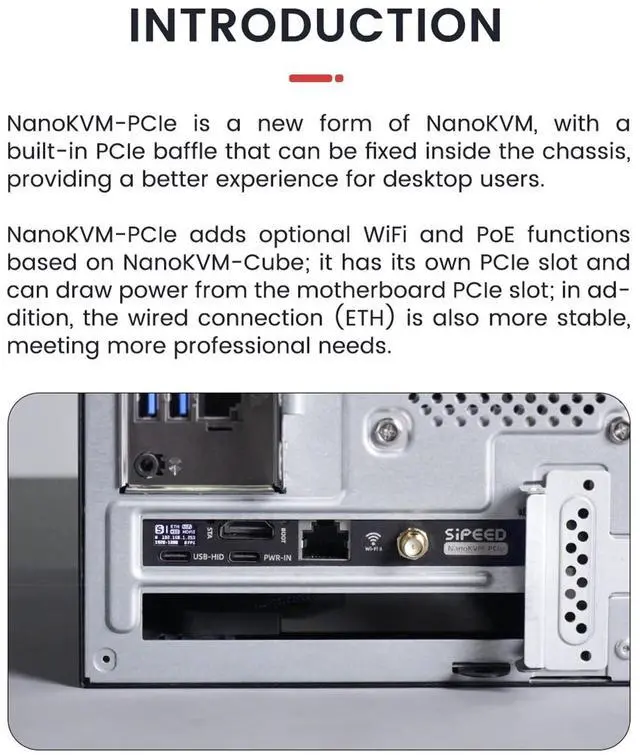
NanoKVM-PCIe is a new form factor of NanoKVM, featuring an integrated PCIe bracket for secure mounting inside the chassis, delivering an enhanced experience for desktop users.
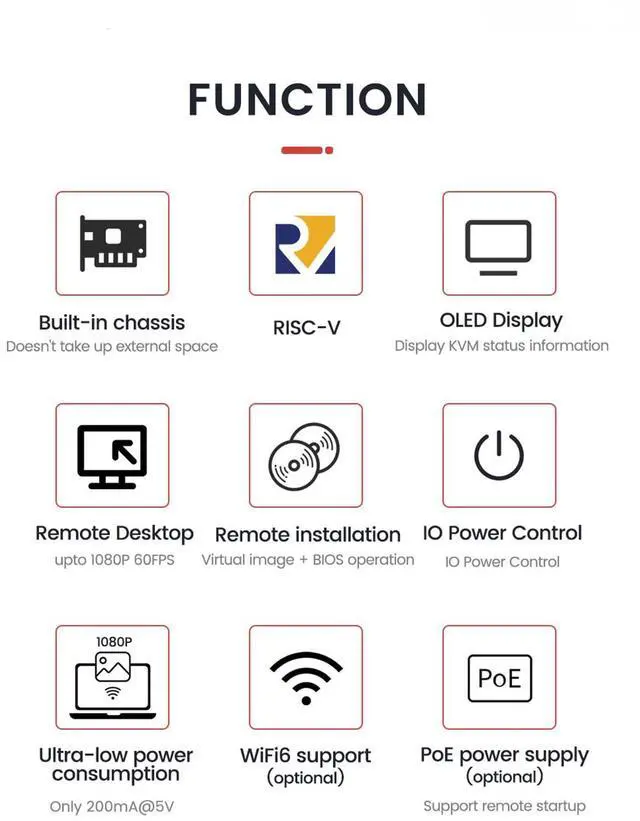
Building upon the NanoKVM-Cube, NanoKVM-PCIe adds optional WiFi and PoE functionality (available as optional features); It features a PCIe slot for power delivery from the motherboard's PCIe interface. Additionally, its wired Ethernet (ETH) connection offers enhanced stability, meeting more professional requirements. Both NanoKVM-Cube and NanoKVM-PCIe share the same image and application suite, automatically adapting to different hardware versions.
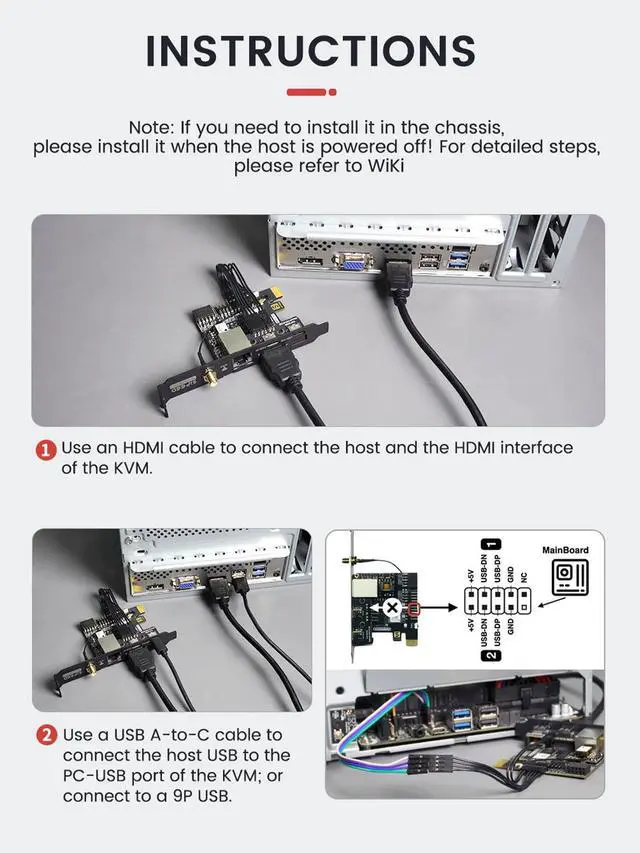
The NanoKVM series includes an HDMI input port that can be recognized by the computer as a monitor to capture the computer's display. A USB 2.0 port connects to the host computer, functioning as a HID device (e.g., keyboard, mouse, touchpad), while utilizing spare TF card storage space to mount as a USB drive. All models include a standard 100Mbps Ethernet port for network transmission of video and control signals. The PCIe version features a standard 0.49-inch OLED display showing real-time status information, WiFi configuration details, and more.
Note: The NanoKVM PCIe version draws power exclusively from the PCIe interface and cannot function as a graphics card/display device directly receiving images from PCIe.
To meet diverse user needs, the NanoKVM-PCIe offers two optional modulesWiFi and PoEwhich can be freely combined.
-Use Cases-
- Server Management: Enables real-time server monitoring, status retrieval, and control operations.
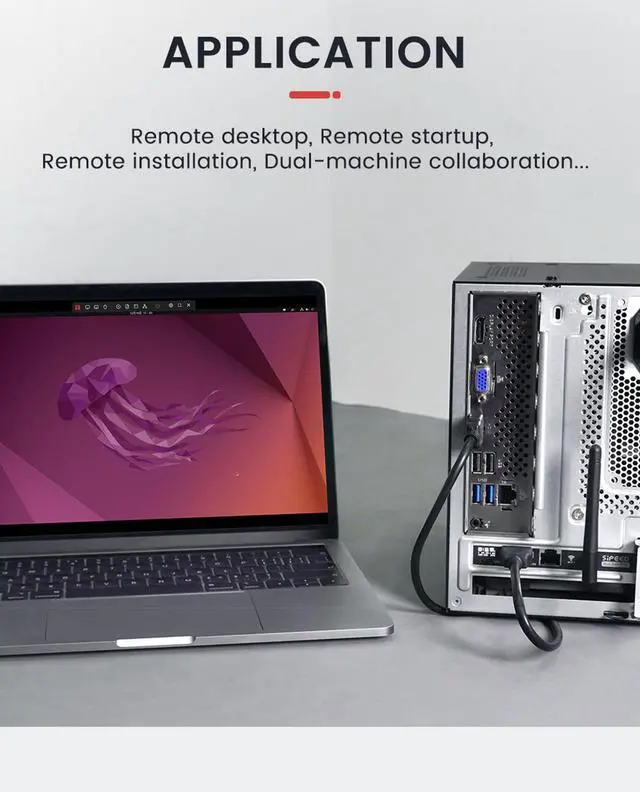
- Remote Desktop & Power Management: NanoKVM eliminates dependency on network connectivity or host software, functioning as external hardware to deliver direct remote control capabilities.
- Remote System Installation: NanoKVM emulates a USB drive to mount installation images for OS deployment or access BIOS settings;
- Remote Serial Port: NanoKVM exposes two serial ports for IPMI integration or web-based serial terminal interaction with development boards. Users may also expand with additional accessories;
- Dual-Computer Collaborative Operation