


 All Categories
Built for How Business Buys.
All Categories
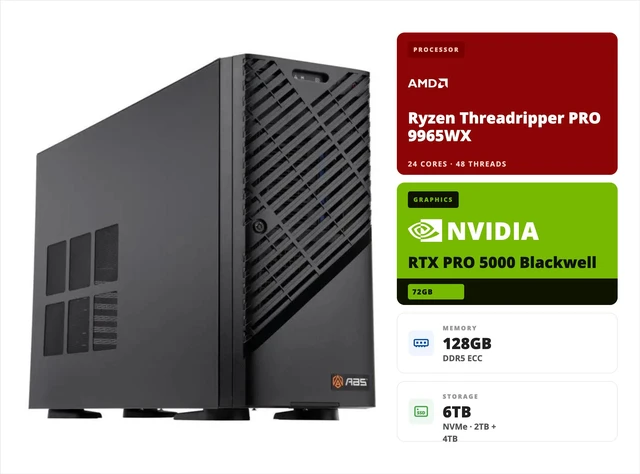
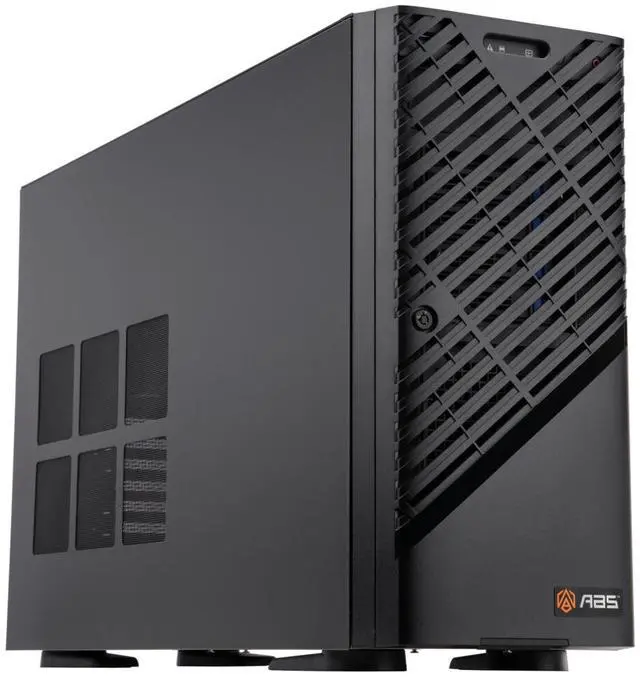
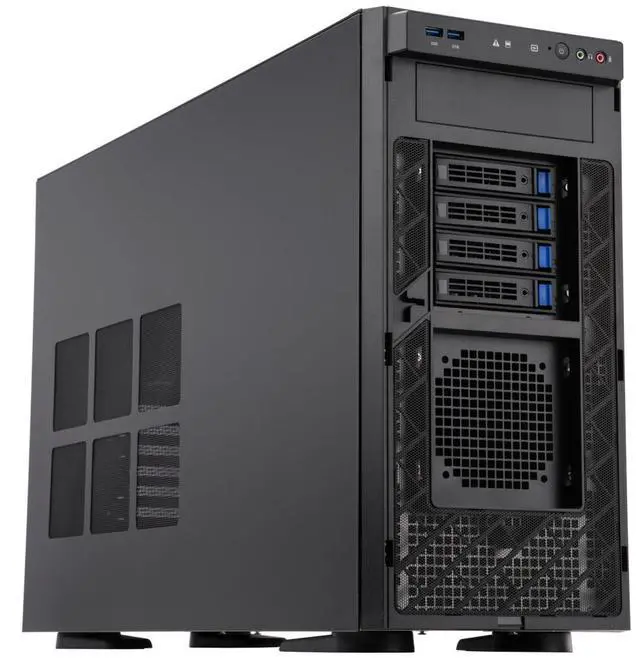
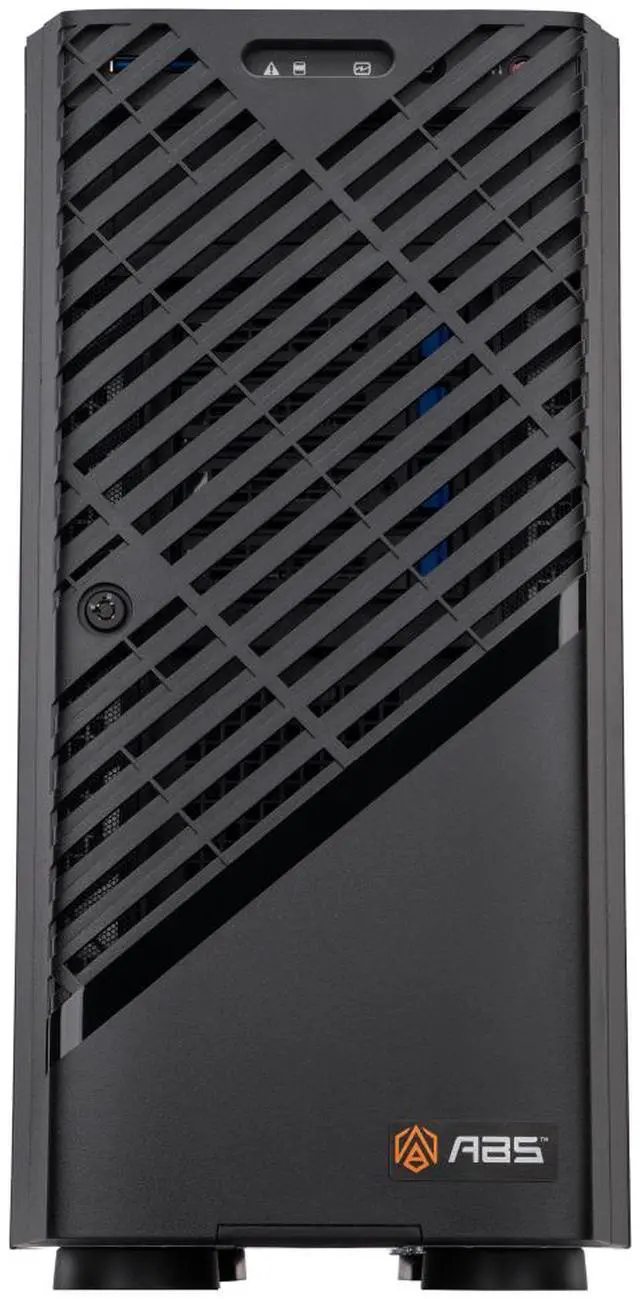
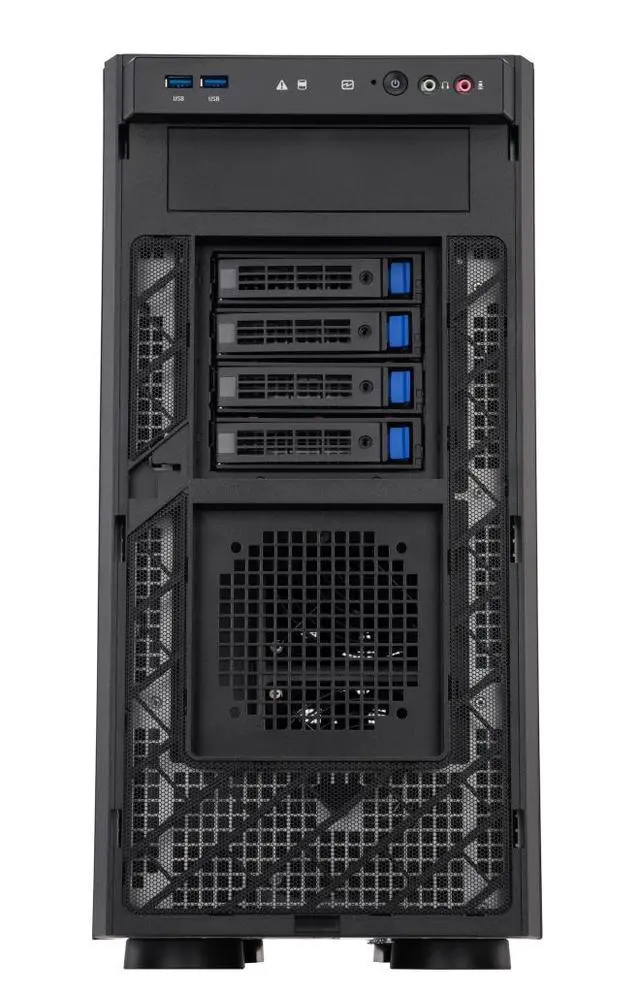
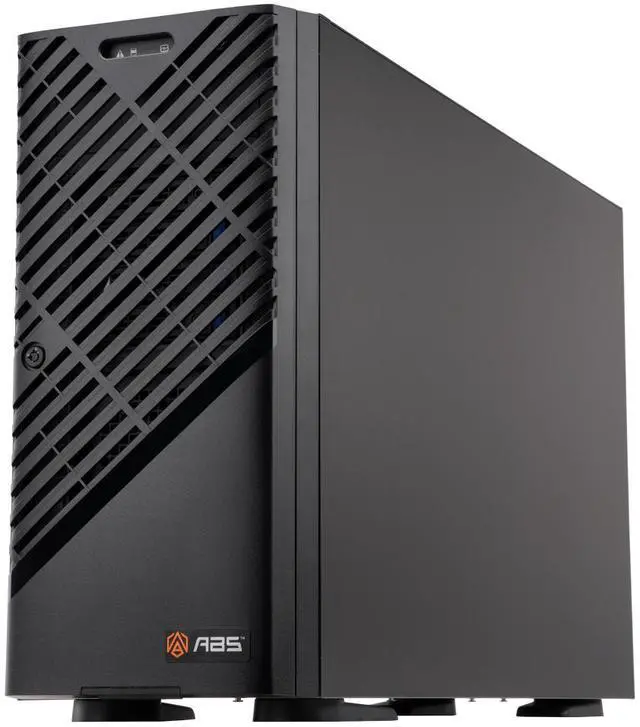
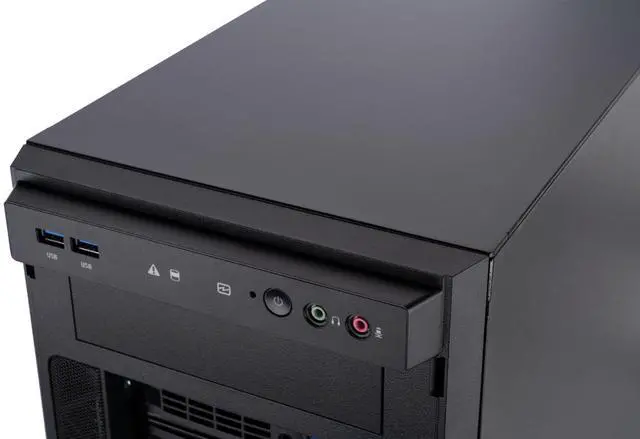


The same 72 GB RTX PRO 5000 Blackwell as this chassis lineup's entry tier, but paired with a 24-core, 48-thread Threadripper PRO instead of a smaller Xeon-based CPU. The difference shows up before the GPU ever gets involved — in how fast data gets loaded, tokenized, and handed off, and how many things can happen at once.

A server-derived CPU platform with real parallelism, next to a memory-rich professional GPU:
Neither one waits on the other. Here's how a typical AI workload actually splits across the two:

On the entry Xeon-based tier, a smaller CPU can still fall behind when several of these run at once. 24 cores and 48 threads give this configuration room to run more of them in parallel.
The listing's own AI Features, translated into what this specific CPU/GPU pairing actually does:

Same 72GB ceiling for local models as the entry tier, but 48 threads mean the agent-orchestration and tool-calling layer around the model doesn't wait on the CPU.

48 threads handle heavier parallel ETL and preprocessing pipelines than the entry tier, feeding the GPU continuously instead of intermittently.

The server-derived sTR5/WRX90 platform with ECC memory and 8-channel DDR5 keeps memory bandwidth ahead of a 48-thread CPU on long simulation runs.

CPU-side scene prep (geometry, physics) keeps pace with GPU-side ray tracing instead of bottlenecking it, on the same 72GB GPU.

48 threads handle multi-stream encode/transcode queuing while Blackwell-generation video engines handle the GPU-accelerated encode itself.

Faster build and compile times from the extra threads, while the same 72GB GPU drives real-time engine previews.
Scene photos are AI-generated illustrations of typical deployments, not photographs of this exact product.
| ZRP9965WX-RP500072 | |
|---|---|
| CPU | AMD Threadripper PRO 9965WX — 24-core / 48 threads, sTR51 |
| GPU | NVIDIA RTX PRO 5000 Blackwell — 72 GB GDDR7 |
| Memory | 128 GB DDR5, ECC Registered |
| Storage | 2 TB M.2 NVMe (OS) + 4 TB M.2 NVMe (Data) |
| Networking | 2× 10 Gb/s LAN + 1× 10/100/1000 Mbps management LAN |
| Motherboard | Gigabyte MH53-G40 (Gigabyte W773-H5D-AA01 barebone) |
| Power | Single 2000 W ATX 80 PLUS Gold |
| Expansion | 8× DIMM (8-channel DDR5), 6× PCIe 5.0 x16, 4× M.2 (2 populated, 2 open) |
| OS | Ubuntu |
| Optional | OpenClaw agent framework (pre-installed); Qwen 3.5 27B+ local LLM package |
Both configurations carry the identical 72GB RTX PRO 5000 Blackwell GPU. This one adds a 24-core/48-thread Threadripper PRO instead of a smaller Xeon-based CPU — more headroom for data preprocessing, agent orchestration, and build jobs alongside GPU work.
The CPU handles data ingestion, tokenization, agent orchestration and tool-calling, and build/compile jobs. The GPU handles model inference and fine-tuning, ray-traced rendering, and video encode/decode.
This configuration populates 2 of the platform's 4 M.2 slots (2TB OS + 4TB data), leaving 2 M.2 slots and all 4 installed SATA hot-swap bays (plus 4 more optional) open.
The AI agent framework (OpenClaw) is pre-installed; a Qwen 3.5 27B or higher local LLM package is an optional add-on configured at order time.
It is TAA compliant and assembled in the USA, with compliance documents available for purchase review.
1-year parts and labor limited warranty backed by ABS manufacturer support. As a Build to Order system, it is custom built and stress-tested after purchase.