


 All Categories
Built for How Business Buys.
All Categories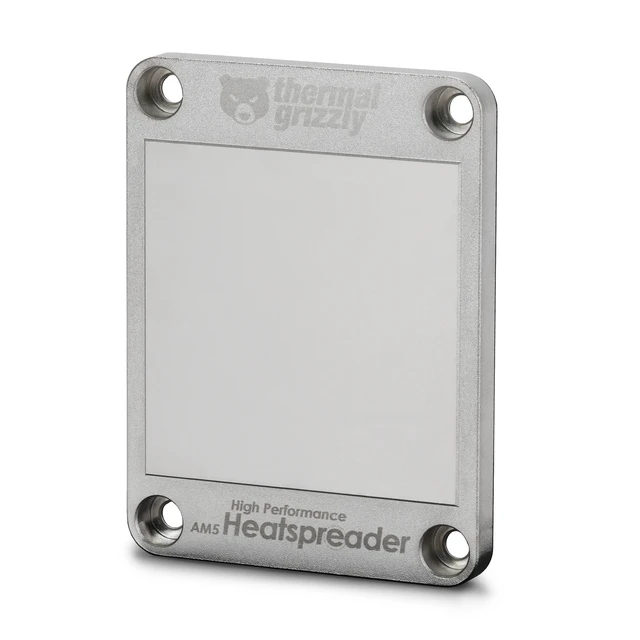
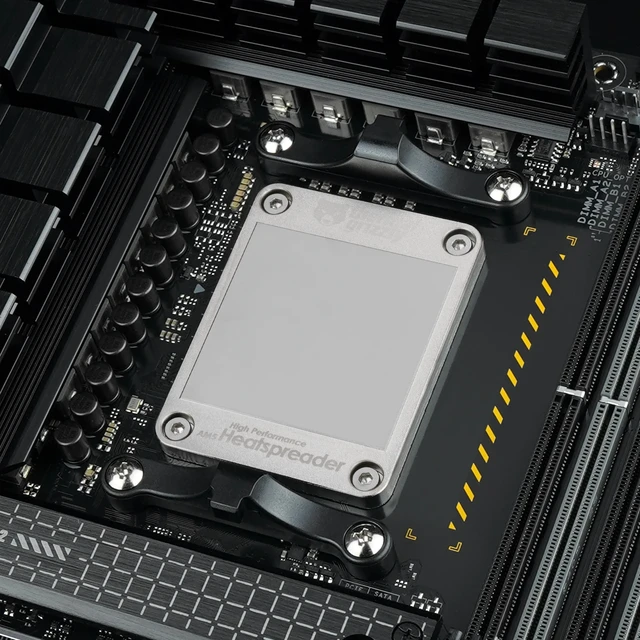
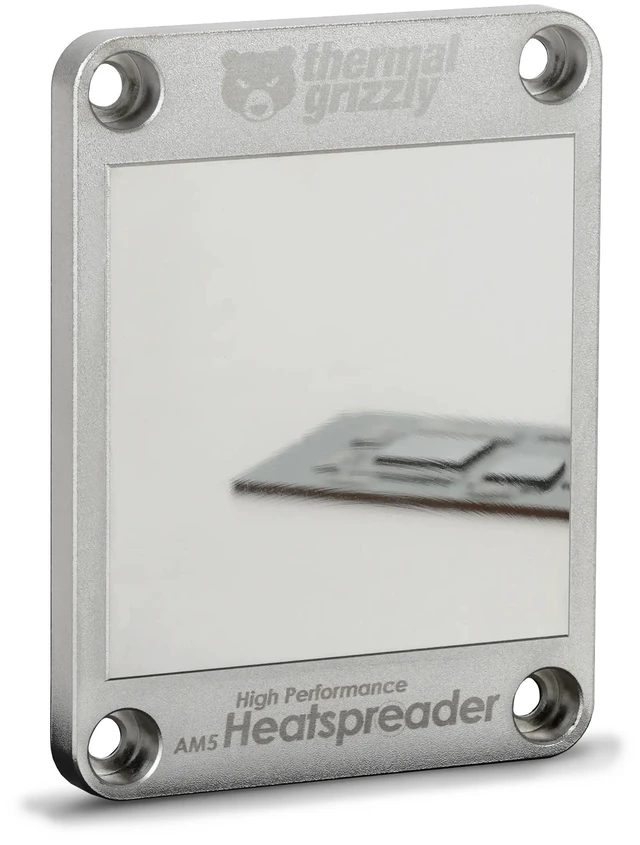
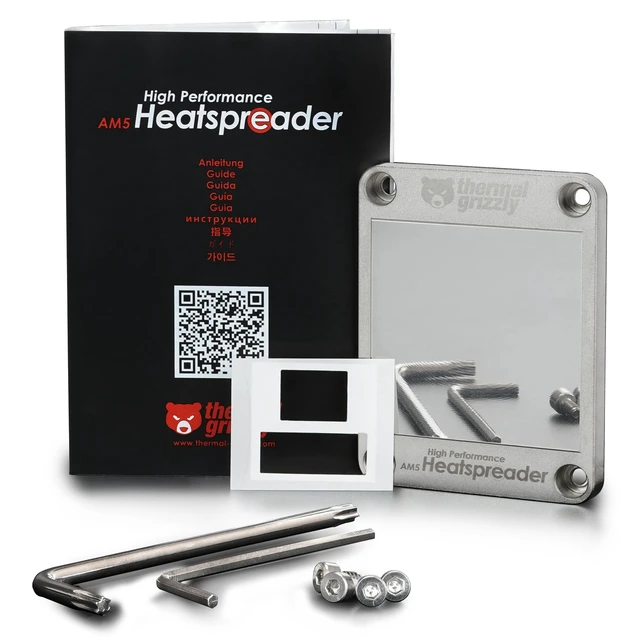
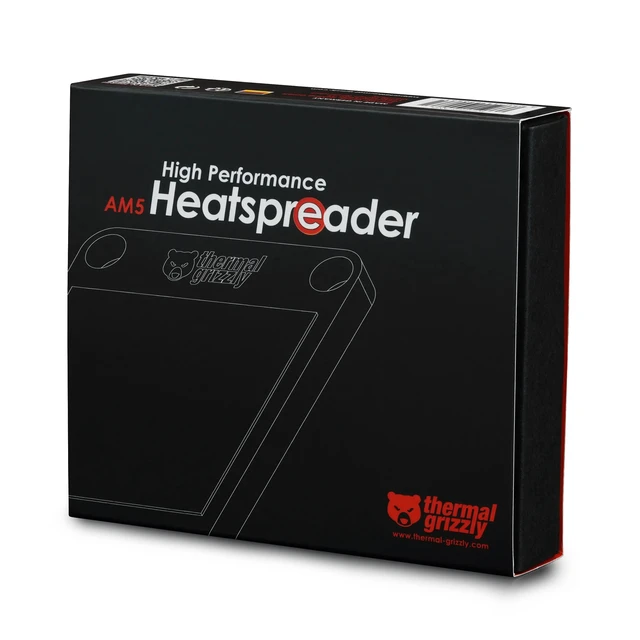


Thermal Grizzly's AM5 High Performance Heatspreader (HPHS) is an upgrade heatspreader for delidded AMD Ryzen 7000 and Ryzen 9000 processors. It replaces the SAM and heatspreader, so it is only for delidded CPUs!
The heatspreader is made of nickel-plated copper and features a precision diamond milled surface that is 240 percent larger than the one on the original heatspreader. Thermal Grizzly says this increased surface area over the original allows for maximum heat dissipation. The precision milling ensures extremely low surface roughness for best contact with the heat sink, while the part stays compatible with air and water coolers. SAM stands for Socket Actuation Mechanism, a part of the motherboard.
In Thermal Grizzly's own test, an AMD Ryzen 7900X at 5.0 GHz and 1.3 vCore under a 280 mm AiO reached about 90 °C with the stock heatspreader. With this one it stayed below 80 °C. Thermal Grizzly calls those values guidelines: results depend on the individual processor, the room temperature and the cooling used.
Traditional thermal pastes and gallium-based liquid metals are both compatible with the nickel-plated surface. The nickel forms a barrier layer between the liquid metal and the copper cooler: liquid metal does not diffuse into the copper, and alloying is minimized. As a result, Thermal Grizzly says, multiple applications of liquid metal are generally not necessary. For the best possible temperatures under load it recommends liquid metal, such as Conductonaut, as the thermal interface (TIM) between the CPU and the heatspreader.
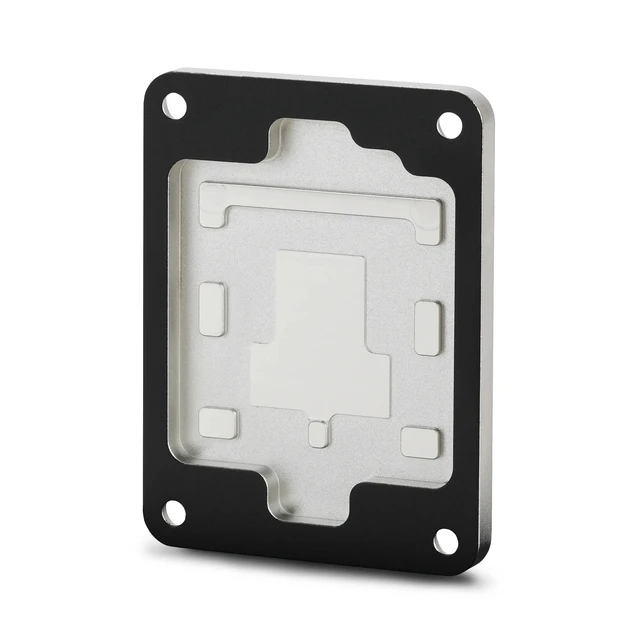
Thermal Grizzly's current product page warns about thermal sheets in this spot. The internal contour of the HPHS is optimized for liquid metal, which can be applied in a very thin layer, and the HPHS rests directly on the CPU package (PCB). With thermal sheets such as Carbonaut and KryoSheet between the CPU die and the HPHS, the small height difference may put excessive mounting pressure on the CPU. This can cause operational issues, which may include incorrect memory detection or memory instability. With Kapton Insulation Sheets there is a risk that the HPHS rests on the sheet and the CPU die does not make contact. To insulate the electronic components on the CPU package, the page asks for a thin layer of TG Shield.
The data sheet linked below is older. It still describes a KryoSheet graphene thermal pad as the way to the most maintenance-free system possible, with the included cover (the insulation sheet) to protect the electronic components, since KryoSheet pads are electrically conductive. The note above is the newer of the two, so go by the note.
