

 All Categories
Built for How Business Buys.
All Categories


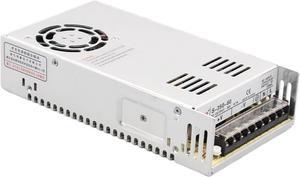
![[PowerNex] Mean Well SE-450-15 15V 30A 450W Single Output Switching Power Supply](https://c1.neweggimages.com/productimage/nb300/BA1GD2409190C1WNL86.jpg "[PowerNex] Mean Well SE-450-15 15V 30A 450W Single Output Switching Power Supply")
A server case is an enclosure that houses important components such as the motherboard, processor, storage drives, network interface controllers, and more. There are several types of server cases and the size of your organization’s network influences the type of case you use. Below, NeweggBusiness will outline the main types of server cases, chassis, and enclosures.
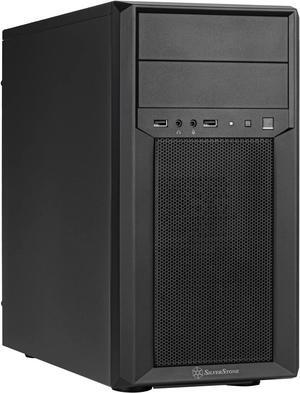
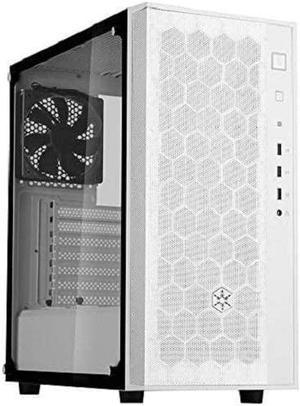
A common type of computer case for desktops and servers, it is available in a variety of sizes and designs. Common characteristics of tower cases include a vertically mounted motherboard, front-facing optical drives, and input/output connections in the rear. A tower case is ideal for organizations with smaller environments. Compared to other types of servers, they are more economical choices.
Pedestal server cases look very similar to towers, but there are a few differences that make them more suited for server use. A major distinction is that many pedestal enclosures are designed to accommodate larger motherboard standards, such as Server System Infrastructure (SSI) boards. Some pedestal enclosures support passive cooling for the processor, allowing them to run quieter. Passive cooling for a processor means that it does not require a fan for cooling, relying only on a heat sink and low case temperatures.
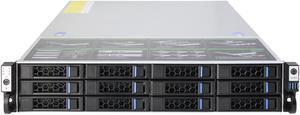
A rackmount server case is an enclosure with standardized dimensions to fit a server rack. It is geared towards organizations that need to densely pack multiple servers into one area. Because rackmount servers can generate great amounts of heat, having them in a temperature-controlled room is recommended.
When shopping for a rackmount server chassis, you will have several sizes to choose from. The next section will detail the most common standards.
Server racks can be either 19 inches wide or 23 inches wide, with 19 inch racks being slightly more common. Rackmount cases can usually be adapted for both 19 and 23 inch racks with use of mounting brackets.
For measuring the height of server equipment, rack units are used. One rack unit is equal to 1.75 inches and is often shortened to U or RU. A server rack is typically 42U tall, though there are many other sizes available.
The most common rackmount server case sizes are 1U, 2U, 3U, and 4U. A 1U server case is the smallest available and is the most economical. Larger options such as 2U and 3U are designed to give additional space to accommodate more processors, memory, and hard drives. A 4U chassis allows for even more space for components and some can fit as many as 24 hard drives. The downsides of larger rack units are higher cost, more heat, and more power requirements.