


 All Categories
Built for How Business Buys.
All Categories
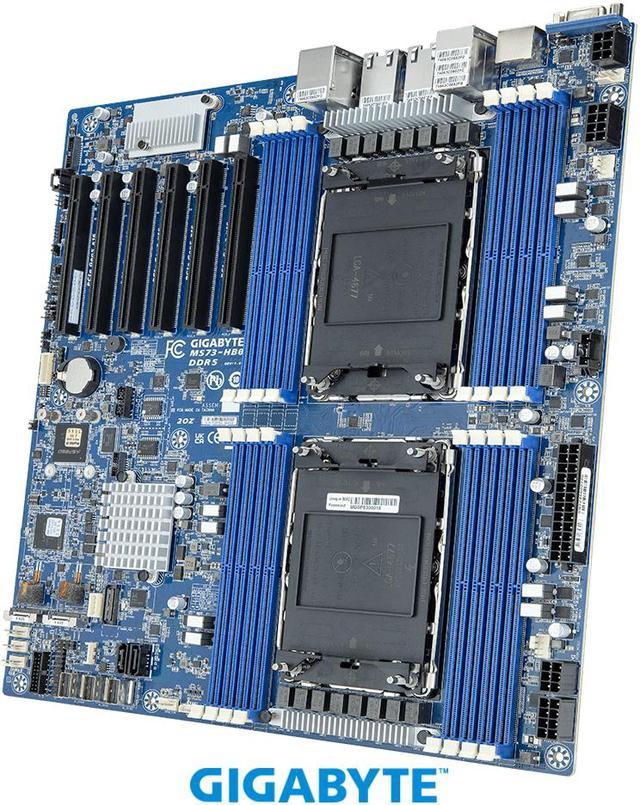
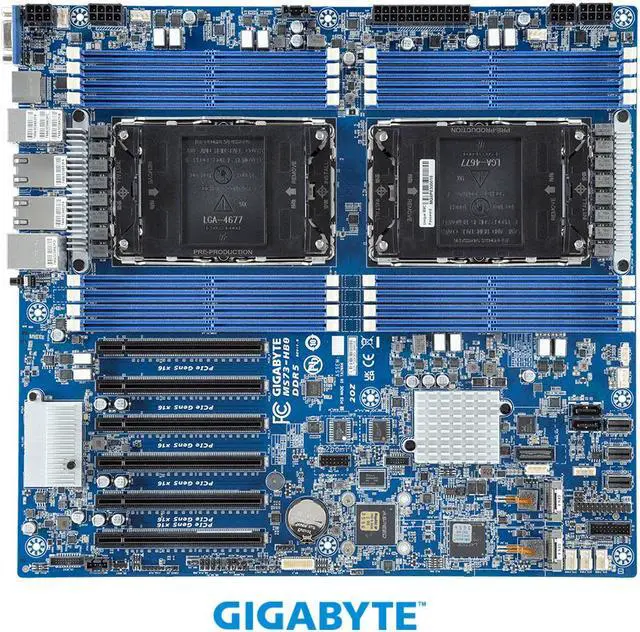
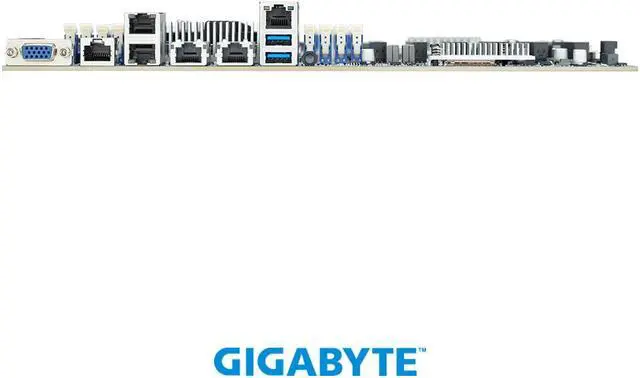
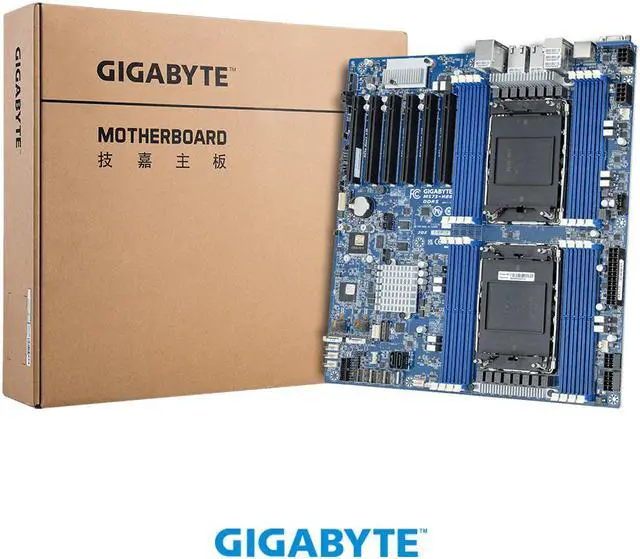


Engineering richer features in a revolutionary platform, Intel has made an incredible jump in processor performance in the business transformation journey. AI and deep learning performance will benefit from the built-in AI acceleration engines, while networking, storage, and analytics leverage other specialized accelerators in the 4th & 5th Gen Intel Xeon Scalable processors. Adding a host of new features to target a wide range of workloads, the new families of Intel Xeon processors will deliver even better CPU performance and performance per watt, and do so on a PCIe 5.0 platform with 2x the prior gen throughput to greatly speed up data movement to and from GPUs and storage. For this new platform, GIGABYTE has products ready to get the most out of Intel Xeon CPU-based systems that support fast PCIe Gen5 accelerators and Gen5 NVMe drives, in addition to support for high performant DDR5 memory.
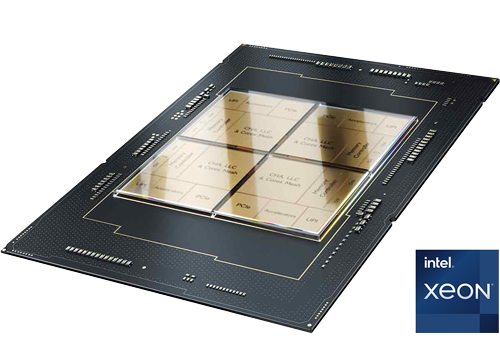

The best in computational performance relies on a system well designed by our engineers to adequately dissipate heat to achieve peak performance.

Our engineers have baked in features to achieve higher efficiency from power supplies and server fans. Along with Titanium and Platinum offerings.

GIGABYTE releases multiple product models and configurations to target exactly what users want without paying for extra features that go unused.

GIGABYTE servers come with GIGABYTE Management Console for server management. Using a web based browser remotely is key to easing management.

Systems are rigorously designed and tested to ensure downtime will not occur. Customers have come to expect stable performance.
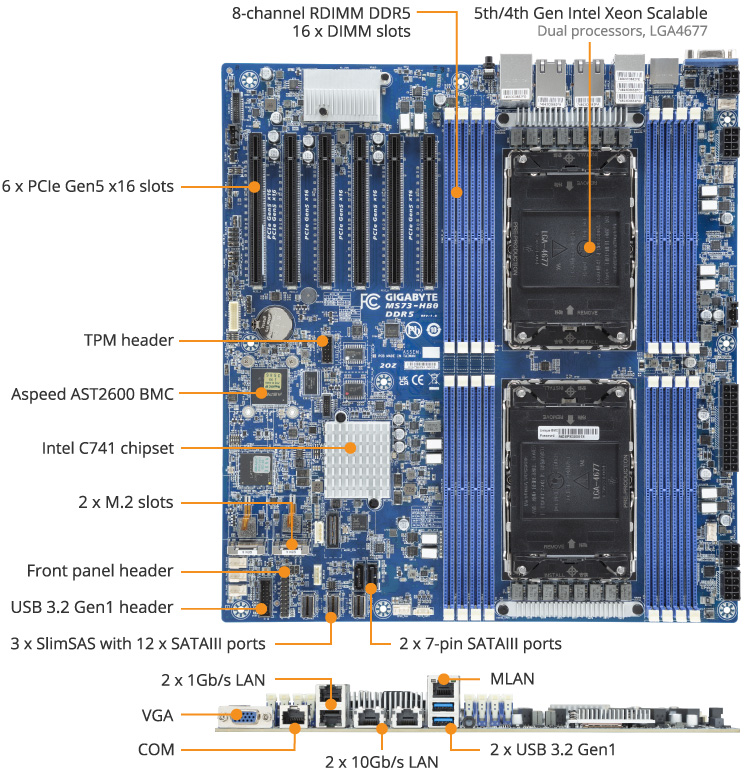
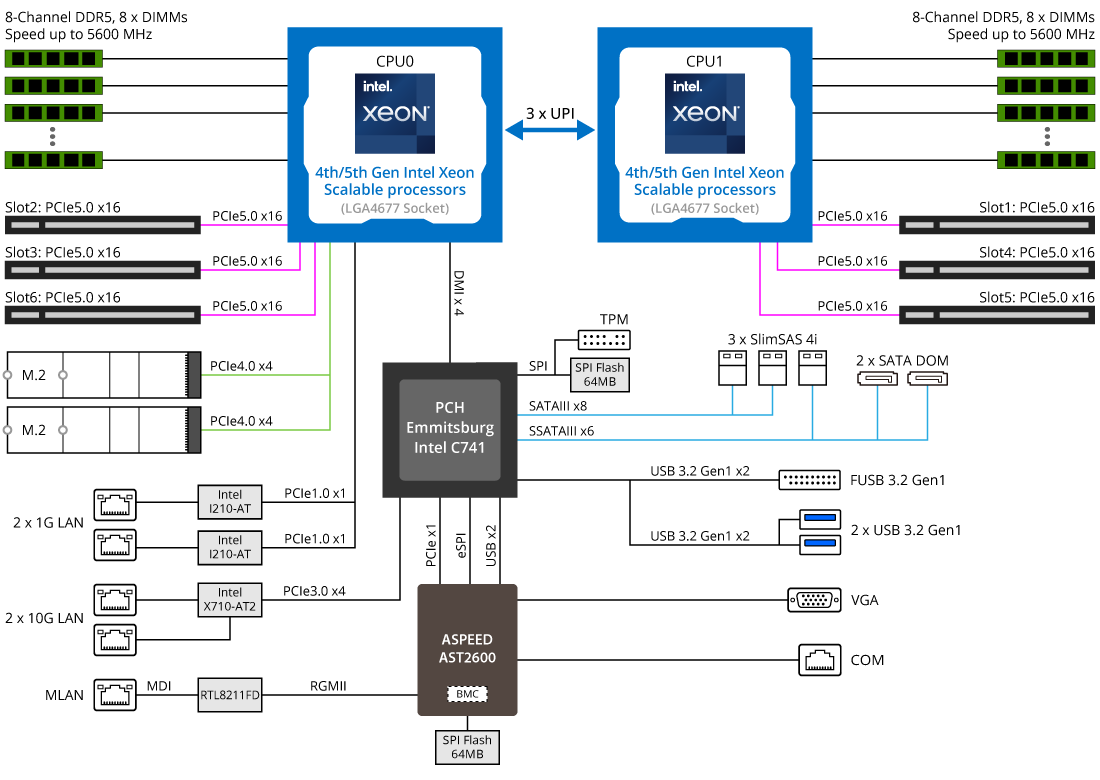

For hardware-based authentication, the passwords, encryption keys, and digital certificates are stored in a TPM module to prevent unwanted users from gaining access to your data. GIGABYTE TPM modules come in either a Serial Peripheral Interface or Low Pin Count bus.

For management and maintenance of a server or a small cluster, users can use the GIGABYTE Management Console, which is pre-installed on each server. Once the servers are running, IT staff can perform real-time health monitoring and management on each server through the browser-based graphical user interface. In addition, the GIGABYTE Management Console also provides:

* The entire materials provided herein are for reference only. GIGABYTE reserves the right to modify or revise the content at anytime without prior notice.
* Advertised performance is based on maximum theoretical interface values from respective Chipset vendors or organization who defined the interface specification. Actual performance may vary by system configuration.
* All trademarks and logos are the properties of their respective holders.
* Due to standard PC architecture, a certain amount of memory is reserved for system usage and therefore the actual memory size is less than the stated amount.