
Home Theater Projectors - Showing 457 - 458 of 458 Products
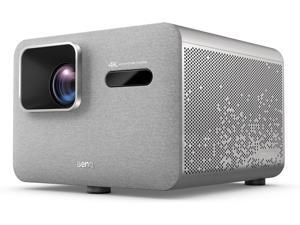
BenQ TK705STi 4K HDR Short Throw Projector, 3000 ANSI Lumens, Google TV, Netflix, Low ...
- Brand: BenQ America
- Model: TK705STI
- Part Number: TK705STI
- Cabinet Color: Grey
- Type: Short-Throw LED DLP
- Native Resolution: UHD 4K Onscreen Resolution
- Brightness: < 1000 lumens
- Model #: TK705STi
- Item #: 9B-236-0011-000R0
- Return Policy: Manufacturer Only Return Policy
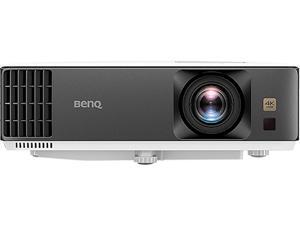
BenQ TK700 4K HDR Console Gaming Projector, 3200 Lumens, HDR 16ms Low Input Lag 4K, ...
- Brand: BenQ
- Part Number: TK700
- Cabinet Color: White
- Type: DLP
- Lamp: Light Source: Lamp Light Source Life: a. Normal 4000 hrs, b. ECO 10000 hrs, c. SmartEco 8000 hrs, d. LampSave 15000 hrs
- Aspect Ratio: 16:9
- Native Resolution: 3840 x 2160
- Brightness: 3200
- Model #: TK700
- Item #: 9B-236-0011-000D8
- Return Policy: Standard Return Policy
Home Theater Projector Buying Tips
Introduction
An HD projector has many benefits, especially the ability to display content that can fill your entire field of view. While HDTVs can be very large, they are not scalable. An HD projector on the other hand, is scalable to a certain extent. Below, NeweggBusiness outlines the basics of HD projectors and some considerations for buying one.
Projection Types
Liquid Crystal Display (LCD)
Capable of high levels of brightness and color accuracy, LCD projection technology is usually found in low- and mid-range HD projectors. Downsides of LCD include lower contrast ratios compared to DLP and LCoS, average black levels, and a higher chance of dead pixels.
Digital Light Processing® (DLP®)
DLP HD projectors usually have very good contrast ratios and vibrant colors. There are two subsets of DLP projectors, three-chip projectors and single-chip projectors. Three-chip DLP projectors tend to cost more than their single-chip counterparts and are sometimes used in environments that require a high level of image quality, such as movie theaters.
Liquid Crystal on Silicon (LCoS)
LCoS projection technology—sometimes marketed as either SXRD or D-ILA—is a mix of both DLP and LCD projection types. It is mainly found in mid- and high-end HD projector offerings. Compared to LCD and DLP projection types, LCoS advantages include high levels of brightness, resolution, and color accuracy. The latest 4K HD projectors often utilize LCoS projection.
Other Considerations
Projection Surface
One consideration that can be just as important as the projector is the screen. While a white wall can be used as a projection surface, it is not an ideal solution. When projecting onto a wall, the texture of the wall can sometimes be noticed. A projector screen eliminates this problem by providing an ideal surface that is smooth and has uniform reflectivity.
Ambient Light
When installing an HD projector, a big concern should be the amount of ambient light in the environment. Projectors work best when there is little ambient light, as ambient light can lower the contrast ratio of the displayed image. One solution is to purchase a very bright and high contrast projector to overcome the ambient light. Another option is to alter the environment to limit the amount of ambient light.
Audio Output
While HDTVs usually have built-in speakers, that is not the case for HD projectors. Some HD projector models include speakers, but they may not be ideal for use in large environments such as concert halls or theaters. Ideally, audio output should be sent to a dedicated system such as an A/V receiver.