
Wireless Routers - Showing 1873 - 1881 of 1881 Products


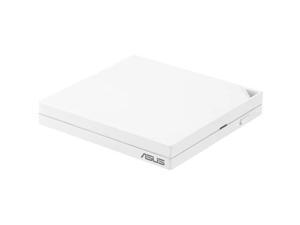

Refurbished: ASUS RT-AX57 Go - AX3000 Dual Band Wi-Fi 6 (802.11ax) Travel Router, ...
- Model #: RT-AX57
- Item #: 9SIVHBEKRT7012
- Return Policy: Quality Photo BTB Return Policy
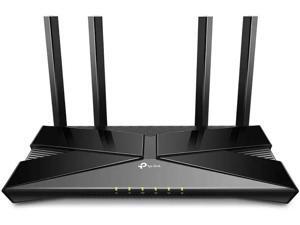

Refurbished: TP-Link Archer AX1450 WiFi 6 Dual-Band Wireless Router, Up to 1.45 Gbps ...
- Wireless Data Rates: AC1200
- Frequency Band: 2.4 GHz / 5 GHz
- WAN Ports: 1 x 10/100/1000M WAN; 4 x 10/100/1000M LAN
- Interface: RJ-45
- Model #: Archer AX1450
- Item #: 9SIVHBEKSP7776
- Return Policy: Quality Photo BTB Return Policy
Refurbished: ASUS RT-BE92U BE9700 Tri-Band WiFi 7 Router, Supports 320MHz Bandwidth & ...
- Model #: RT-BE92U BE9700
- Item #: 9SIVHBEKGS4532
- Return Policy: Quality Photo BTB Return Policy
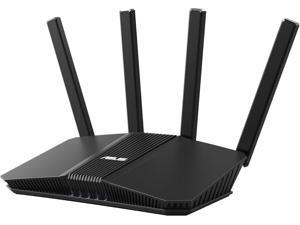
Refurbished: ASUS RT-BE58U WiFi 7 BE3600 AiMesh Extendable Router, 4K-QAM, MLO, AI ...
- Model #: RT-BE58U
- Item #: 9SIVHBEKGS3661
- Return Policy: Quality Photo BTB Return Policy
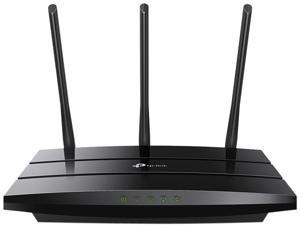
TP-Link AC1900 Smart WiFi Router (Archer A8) -High Speed MU-MIMO Wireless Router, Dual ...
- Wireless Data Rates: 5 GHz: 1300 Mbps (802.11ac) 2.4 GHz: 600 Mbps (802.11n)
- Frequency Band: 2.4 GHz / 5 GHz
- WAN Ports: 1 x 10/100/1000M
- Brand: TP-Link
- Standards: IEEE 802.11a
- WiFi Generation: Wi-Fi 5
- Wireless Standard: IEEE 802.11a / IEEE 802.11ac / IEEE 802.11b / IEEE 802.11g / IEEE 802.11n
- Security: SPI Firewall Access Control IP & MAC Binding Application Layer Gateway
- Model #: Archer A8
- Item #: 9B-0E6-002W-006B7
- Return Policy: Standard Return Policy

Dell MTMPN AC Adapter
- Model #: MTMPN
- Item #: 9B-0E6-00AA-002R8
- Return Policy: Standard Return Policy
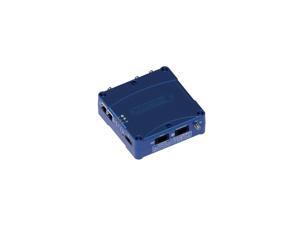
Multitech LTE Cat 4 Cellular Router with Fallback - Wi-Fi - GNSS and Accessories Kit ...
- Brand: Multi-tech Systems
- Model #: MTR3-L4G2D-AC00PA-EWM
- Item #: 9SIV1DSKSP7488
- Return Policy: NothingButSavings Return Policy

LTE CAT 4 ROUTER WITH FALLBACK AND ACCESSORY KIT (GLOBAL)
- Brand: Multi-tech Systems
- Model #:
- Item #: 9SIV1DSKSP7576
- Return Policy: NothingButSavings Return Policy
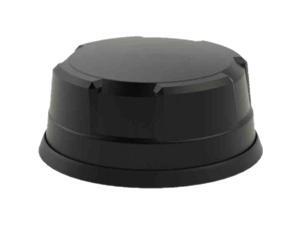
Sierra Wireless AirLink Antenna: 5-in-1 Dome 6001275
- Model #: 6001275
- Item #: 9SIV1DSKAE2212
- Return Policy: NothingButSavings Return Policy
Key Wireless Router Technologies
Introduction
Wireless router technology is constantly improving, with new models being quicker, more feature-packed, and having longer ranges than their predecessors. The wireless router is also becoming more essential, as Wi-Fi™ mobile devices such as tablets and cell phones are increasingly used in offices. If you are shopping for a new wireless router for your business network, the guidance below will help you understand the tech and specifications commonly associated with them.
Data Rates
Ever notice that wireless routers usually have a rated megabit per second (Mbps) or gigabit per second (Gbps) speed? For instance, you will commonly see 150 Mbps, 300 Mbps, or 1.9 Gbps on router packaging and product descriptions. Those numbers are maximum theoretical data transfer rates, which can serve as indicators for performance.
However, real-world speeds can vary, as interference and distance can negatively affect performance. A wireless router’s data rate only applies to wireless communication within its network, and a faster router does not necessarily mean faster data transfers from external networks.
Security
One method of protecting your network aside from a hardware-based firewall is to utilize a wireless router’s built-in security features. Below, NeweggBusiness outlines several common security technologies.
- Wired Equivalent Privacy (WEP) – An older standard that is less secure than newer technologies such as Wi-Fi Protected Access. Despite its age however, it is still supported by some routers. To connect to a WEP network, users need to input a hexadecimal encryption key.
- Wi-Fi Protected Access (WPA) – WPA superseded WEP security as the former offers better protection. Unlike WEP, users input a password rather than a hexadecimal key to access the wireless network. However, it has since been superseded by WPA2.
- Wi-Fi Protected Access 2 (WPA2) – Features stronger encryption than WPA and is supported by many modern wireless routers.
Single Band vs. Dual Band
A wireless router’s band is the frequency that it uses to communicate with wireless devices and has an impact on network performance. The more crowded a wireless band is, the more interference the devices on that band will experience.
The two commonly used bands for wireless routers are 2.4 GHz and 5 GHz. The advantage of a dual band wireless router is that it can broadcast on both 2.4 GHz and 5 GHz bands.
Standards
There are several wireless standards that are commonly used, some of which are listed below.
Standard | Band | Maximum Speed |
|---|---|---|
802.11ac | 5 GHz | 6933.6 Mbps |
802.11n | 2.4 GHz / 5 GHz | 600 Mbps |
802.11g | 2.4 GHz | 54 Mbps |
802.11b | 2.4 GHz | 11 Mbps |