
AMD Motherboards - Showing 601 - 624 of 881 Products


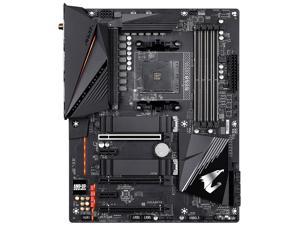

GIGABYTE B550 AORUS PRO AC AM4 AMD B550 ATX Motherboard with Dual M.2, SATA 6Gb/s, ...
- Brand: GIGABYTE
- CPU Socket Type: AM4
- Chipset: AMD B550
- Serial ATA (SATA): 6 x SATA 6Gb/s
- Form Factor: ATX
- Number of Memory Slots: 4x288pin (DDR4)
- Memory Standard: DDR4 5400(OC) / 5200(OC) / 5000(OC) / 4866(OC) / 4600(OC) / 4400(OC) / 4000(OC) / 3600(OC) / 3333(OC) / 3200 / 2933 / 2667 / 2400 / 2133 (3rd Gen AMD Ryzen with Radeon Graphics processors) DDR4 5200(OC) / 5000(OC) / 4866(OC) / 4600(OC) / 4400(OC) / 4000(OC) / 3600(OC) / 3333(OC) / 3200 / 2933 / 2667 / 2400 / 2133 (3rd Gen AMD Ryzen Processors) DDR4 5100(OC) / 5000(OC) / 4866(OC) / 4600(OC) / 4400(OC) / 4000(OC) / 3600(OC) / 3333(OC) / 3200 / 2933 / 2667 / 2400 / 2133 (AMD Ryzen 5000 series Processors)
- PCI Express 3.0 x16: 2 x PCI Express 3.0 x16* * The M2B_SB connector shares bandwidth with the PCIEX4 slot. The PCIEX4 slot will become...
- Model #: B550 AORUS PRO AC
- Item #: 9SIV296K0A1261
- Return Policy: Slava Computers Return Policy
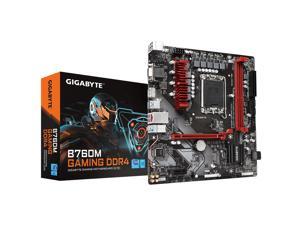
Gigabyte B760M GAMING DDR4 motherboard Intel B760 Express LGA 1700 micro ATX
- Brand: GIGABYTE
- Memory Standard: DDR4-SDRAM
- CPU Type: Computer Accessories
- Model #: B760M GAMING DDR4
- Item #: 9SIV296K816385
- Return Policy: Slava Computers Return Policy
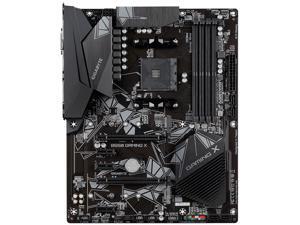
GIGABYTE B550 GAMING X AM4 AMD B550 ATX Motherboard with Dual M.2, SATA 6Gb/s, USB 3.2 ...
- Brand: GIGABYTE
- CPU Socket Type: AM4
- Chipset: AMD B550
- Serial ATA (SATA): 4 x SATA 6Gb/s
- Form Factor: ATX
- Number of Memory Slots: 4x288pin (DDR4)
- Memory Standard: 3rd Gen AMD Ryzen Processors: Support for DDR4 4000(O.C.)/ 3600(O.C.)/ 3333(O.C.)/ 3200/ 2933/ 2667/ 2400/ 2133 MHz memory modules New Generation AMD Ryzen with Radeon Graphics processors: Support for DDR4 4733(O.C.)/ 4600(O.C.)/ 4400(O.C.)/ 4000(O.C.)/ 3600(O.C.)/ 3333(O.C.)/ 3200/ 2933/ 2667/ 2400/ 2133 MHz memory modules
- PCI Express 3.0 x16: 1 x PCI Express x16 slot (PCIEX2), integrated in the Chipset: Supporting PCIe 3.0 x2 mode
- Model #: B550 GAMING X
- Item #: 9SIVS10KU93285
- Return Policy: Yongrui electronic Commerce Co., Limited Return Policy
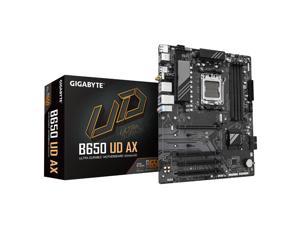
Gigabyte B650 UD AX Motherboard ATX DDR5 CPU Socket AM5 SATA 3 HDMI Wi-Fi 6/6E
- CPU Type: Ryzen 9000 Series
- Model #: B650 UD AX
- Item #: 9SIV296KCE0524
- Return Policy: Slava Computers Return Policy
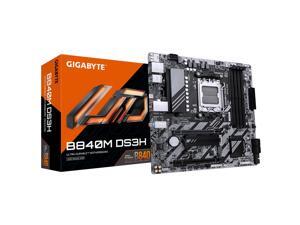
GIGABYTE B840M DS3H Motherboard - AMD Ryzen 9000 CPUs, 8+2+2 Phases VRM, up to ...
- Model #: B840M DS3H
- Item #: 9SIV296KT87282
- Return Policy: Slava Computers Return Policy
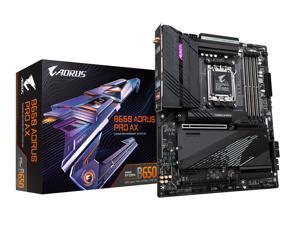
GIGABYTE B650 AORUS PRO AX AM5 LGA 1718 AMD B650 ATX Motherboard, DDR5, USB 3.2 ...
- Brand: GIGABYTE
- CPU Socket Type: AM5
- Chipset: AMD B650
- Serial ATA (SATA): 4 x SATA 6Gb/s
- Form Factor: ATX
- Number of Memory Slots: 4x288pin (DDR5)
- Memory Standard: Support for DDR5 6600(OC) / 6400(OC) / 6200(OC) / 6000(OC) / 5600(OC) / 5200 / 4800 / 4400 MHz memory modules
- Audio Chipset: Realtek® ALC1220-VB CODEC * The back panel line out jack supports DSD audio. High Definition Audio
- Model #: B650 AORUS PRO AX
- Item #: 9SIV296KC78777
- Return Policy: Slava Computers Return Policy
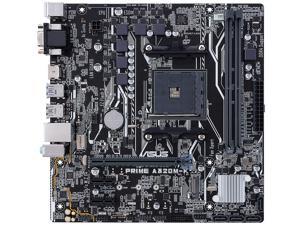

ASUS Prime A320M-K AMD Ryzen AM4 DDR4 HDMI VGA M.2 Micro-ATX A320 Motherboard
- Brand: ASUS
- CPU Socket Type: AM4
- Chipset: AMD A320
- Serial ATA (SATA): 4 x SATA 6Gb/s port(s), gray
- USB 3.0: 4 x USB 3.0 (blue)
- HDMI: 1 x HDMI
- Form Factor: Micro ATX
- Number of Memory Slots: 2x288pin (DDR4)
- Model #: Prime A320M-K
- Item #: 9SIV296JRR4708
- Return Policy: Slava Computers Return Policy
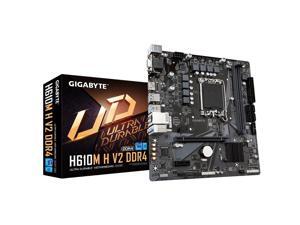
Gigabyte A620M H AMD Socket AM5 Motherboard 2 SMD DIMMs PCIe x16 Micro ATX HDMI
- Brand: GIGABYTE
- Model #: 1.A620M H
- Item #: 9SIV296KG23874
- Return Policy: Slava Computers Return Policy
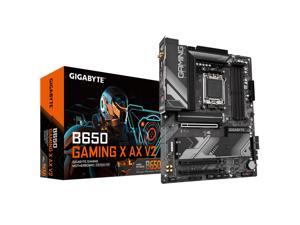
GIGABYTE B650 GAMING X AX V2 AM5 LGA 1718 AMD B650 ATX DDR5, Triple M.2, PCIe 5.0, USB ...
- Brand: GIGABYTE
- CPU Socket Type: AM5
- Chipset: AMD B650
- Serial ATA (SATA): 4 x SATA 6Gb/s
- Form Factor: ATX
- Number of Memory Slots: 4x288pin (DDR5)
- Memory Standard: DDR5 5200
- PCI Express 3.0 x16: 2 x PCI Express x16 slots, supporting PCIe 3.0 and running at x1 (PCIEX1_1/2)
- Model #: B650 GAMING X AX V2
- Item #: 9SIVKY2KRV1087
- Return Policy: JB Rapid Return Policy
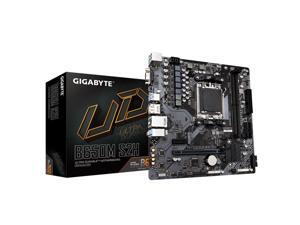
Gigabyte AMD B650M S2H AM5 DDR5 Micro ATX VGA HDMI DP LAN 1 Gigabit M.2 PCIe
- Brand: GIGABYTE
- Memory Standard: DDR5-SDRAM
- CPU Type: Computer Accessories
- Model #: B650M S2H
- Item #: 9SIVS10KU73596
- Return Policy: Yongrui electronic Commerce Co., Limited Return Policy
ASUS Mainboard TUF GAMING B650M-E WIFI - micro ATX - Socket AM5 - AMD B650
- Brand: ASUS
- CPU Type: Computer Accessories
- Model #: 90MB1FV0-M0EAY0
- Item #: 9SIVS10KU53001
- Return Policy: Yongrui electronic Commerce Co., Limited Return Policy
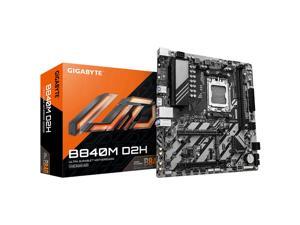
Gigabyte B840M D2H motherboard AMD AM5 DDR5 Micro ATX M.2 PCIe
- Model #: Gigabyte B840M D2H
- Item #: 9SIV296KJP6509
- Return Policy: Slava Computers Return Policy
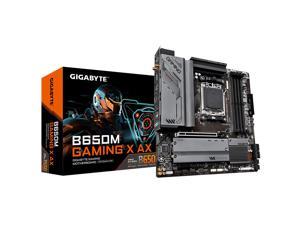
Gigabyte B650M GAMING X AX Motherboard CPU AM5 AMD Ryzen DDR5 HDMI Wi-Fi 6E
- Model #: 1.B650M GAMING X AX
- Item #: 9SIVS10KU92894
- Return Policy: Yongrui electronic Commerce Co., Limited Return Policy
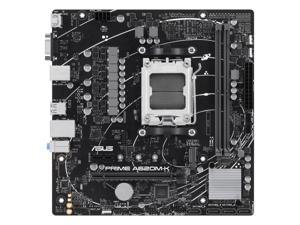
ASUS PRIME A620M-K-CSM AMD A620 micro-ATX Motherboard, DDR5, Supports PCIe 4.0 ...
- Brand: ASUS
- CPU Type: Computer Accessories
- Model #: ASUS PRIME A620M-K-CSM
- Item #: 9SIV296K718190
- Return Policy: Slava Computers Return Policy
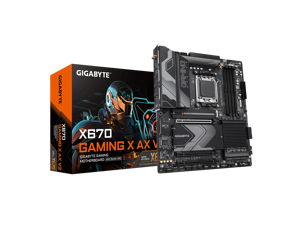
GIGABYTE X670 GAMING X AX V2 AM5 LGA 1718 AMD X670 ATX Motherboard with 5-Year ...
- Brand: GIGABYTE
- CPU Socket Type: AM5
- Chipset: AMD X670
- Serial ATA (SATA): 4 x SATA 6Gb/s
- Form Factor: ATX Form Factor;
- Number of Memory Slots: 4x288pin (DDR5)
- Memory Standard: Support for DDR5 8000(OC)/ 7800(OC)/ 7600(OC)/ 7200(OC)/ 7000(OC)/ 6800(OC)/ 6600(OC)/ 6400(OC)/6200(OC)/6000(OC)/5600(OC)/ 5200/4800/4400 MT/s memory modules 4 x DDR5 DIMM sockets supporting up to 192 GB (48 GB single DIMM capacity) of system memory Dual channel memory architecture Support for non-ECC Un-buffered DIMM 1Rx8/2Rx8/1Rx16 memory modules Support for AMD EXtended Profiles for Overclocking (AMD EXPO™) and Extreme Memory Profile (XMP) memory modules (The CPU and memory configuration may affect the supported memory types, data rate (speed), and number of DRAM modules, please refer to "Memory Support List" for more informat...
- Model #: X670 GAMING X AX V2
- Item #: 9SIV296KNT1278
- Return Policy: Slava Computers Return Policy
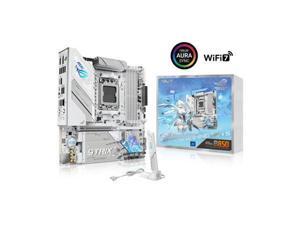
ASUS ROG Strix B850-G Gaming WiFi S motherboard, AM5 mATX , PCle5.0 WiFi7, USB 20Gbps ...
- CPU Socket Type: AM5
- Model #: ASUS ROG Strix B850-G Gaming WiFi S
- Item #: 9SIVS10KU52632
- Return Policy: Yongrui electronic Commerce Co., Limited Return Policy
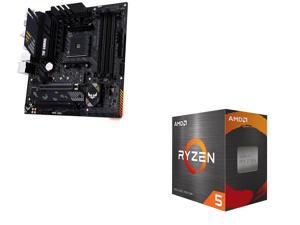
ASUS TUF GAMING B550M-PLUS WIFI II AM4 Micro ATX AMD Motherboard and AMD Ryzen 5 ...
- CPU Type: Ryzen 5000 Series
- Model #: ASUS TUF B550M-PLUS WIFI II+AMD R5 5500
- Item #: 9SIVS10KU54796
- Return Policy: Yongrui electronic Commerce Co., Limited Return Policy
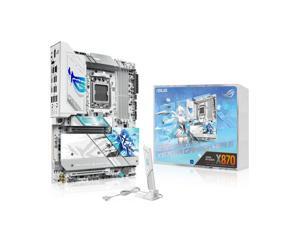
ASUS ROG STRIX X870-A GAMING WIFI S AMD AM5 X870 ATX motherboard 16+2+2 power ...
- Model #: ROG STRIX X870-A GAMING WIFI S
- Item #: 9SIVS75KU14671
- Return Policy: ANHENGXING (HONG KONG) LIMITED Return Policy

ASUS ROG STRIX B450-I GAMING AM4 AMD B450 USB 3.1 HDMI Mini ITX AMD Motherboard
- Brand: ASUS
- CPU Socket Type: AM4
- Chipset: AMD B450
- Serial ATA (SATA): 4 x SATA 6Gb/s
- HDMI: 1 x HDMI
- Form Factor: Mini ITX
- Number of Memory Slots: 2x288pin (DDR4)
- Memory Standard: AMD Ryzen 2nd Generation Processors 2 x DIMM, Max. 32GB, DDR4 3600(O.C.)/ 3466(O.C.)/ 3400(O.C.)/ 3200(O.C.)/ 3000(O.C.)/ 2933(O.C.)/ 2800(O.C.)/ 2666/ 2400/ 2133 MHz Non-ECC, Un-buffered Memory * AMD Ryzen with Radeon Vega Graphics/ Ryzen 1st Generation Processors 2 x DIMM, Max. 32GB, DDR4 3400(O.C.)/ 3200(O.C.)/ 3000(O.C.)/ 2933(O.C.)/ 2800(O.C.)/ 2666/ 2400/ 2133 MHz Non-ECC, Un-buffered Memory * * Refer to www.asus.com for the Memory QVL (Qualified Vendors Lists).
- Model #: ROG STRIX B450-I GAM
- Item #: 9SIVS10KU52874
- Return Policy: Yongrui electronic Commerce Co., Limited Return Policy
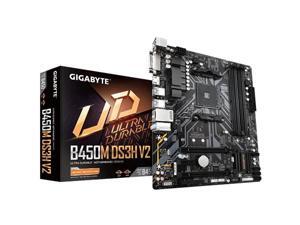
GIGABYTE B450M DS3H V2 (rev. 1.0) AM4 AMD B450 SATA 6Gb/s Micro ATX AMD Motherboard
- Brand: GIGABYTE
- CPU Socket Type: AM4
- Chipset: AMD B450
- Serial ATA (SATA): 4 x SATA 6Gb/s
- Form Factor: Micro ATX
- Number of Memory Slots: 4x288pin (DDR4)
- Memory Standard: DDR4 3600(OC) / 3466(OC) / 3200(OC) / 2933 / 2667 / 2400 / 2133
- PCI Express 3.0 x16: 1 x PCI Express 3.0 x16* * Actual support may vary by CPU. * For optimum performance, if only one PCI Express graphics card is to be installed, be sure to install it in the PCIEX16 slot.
- Model #: B450M DS3H V2
- Item #: 9SIVS10KU80136
- Return Policy: Yongrui electronic Commerce Co., Limited Return Policy
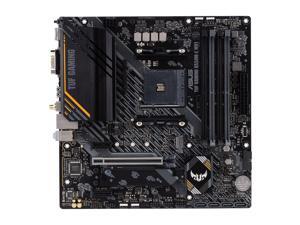
ASUS TUF GAMING B550M-E WIFI Socket AM4 AMD B550 DDR4 Micro ATX Motherboard ...
- Brand: ASUS
- CPU Socket Type: AM4
- Chipset: AMD B550
- Serial ATA (SATA): 4 x SATA 6Gb/s
- Form Factor: Micro ATX
- Number of Memory Slots: 4x288pin (DDR4)
- Memory Standard: DDR4 3200
- PCI Express 3.0 x16: 1 x PCI Express 3.0 x16
- Model #: 90MB17T0-M0EAY0
- Item #: 9SIVS10KU52965
- Return Policy: Yongrui electronic Commerce Co., Limited Return Policy
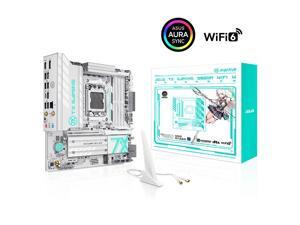
ASUS TX GAMING B850M WIFI W AMD AM5 mATX Motherboard, PCIe 5.0, WiFi 6, three ...
- Model #: TX B850M WIFI W
- Item #: 9SIVS10KU52745
- Return Policy: Yongrui electronic Commerce Co., Limited Return Policy
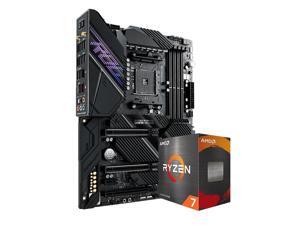
ASUS ROG Crosshair VIII Dark Hero AM4 AMD X570S SATA 6Gb/s ATX AMD Motherboard and ...
- Brand: ASUS
- CPU Socket Type: AM4
- Chipset: AMD X570
- Serial ATA (SATA): 8 x SATA 6Gb/s
- USB 3.0: 4 x USB 3.0
- HDMI: 1 x HDMI
- Form Factor: ATX
- Number of Memory Slots: 4x288pin (DDR4)
- Model #: B-ASUS CROSSHAIR VIII DARK HERO+AMD5800X
- Item #: 9SIVS10KU53036
- Return Policy: Yongrui electronic Commerce Co., Limited Return Policy
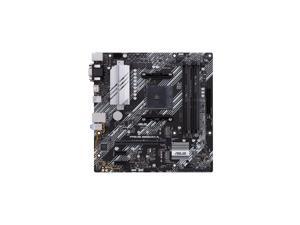
ASUS PRIME B550M-A (90MB14I0-M0EAY0) AM4 AMD B550 SATA 6Gb/s Micro ATX AMD ...
- Brand: ASUS
- CPU Socket Type: AM4
- Chipset: AMD B550
- Serial ATA (SATA): 4 x SATA 6Gb/s
- Form Factor: Micro ATX
- Number of Memory Slots: 4x288pin (DDR4)
- Memory Standard: DDR4 4800(OC) / 4600(OC) / 4466(OC) / 4400(OC) / 4266(OC) / 4133(OC) / 4000(OC) / 3866(OC) / 3733(OC) / 3600(OC) / 3466(OC) / 3333(OC) / 3200 / 3000 / 2800 / 2666 / 2400 / 2133 (AMD Ryzen 4000 G-Series Desktop Processors)* DDR4 4600(OC) / 4400(OC) / 4266(OC) / 4133(OC) / 4000(OC) / 3866(OC) / 3733(OC) / 3600(OC) / 3466(OC) / 3333(OC) / 3200 / 3000 / 2800 / 2666 / 2400 / 2133 (AMD Ryzen 5000 Series / 3000 Series Desktop Processors)* * Refer to www.asus.com for the Memory QVL (Qualified Vendors Lists).
- Onboard Video Chipset: Supported only by CPU with integrated graphic
- Model #: 90MB14I0-M0EAY0
- Item #: 9SIVS10KU53448
- Return Policy: Yongrui electronic Commerce Co., Limited Return Policy
Key Considerations for AMD Motherboards
Introduction
To find the ideal AMD motherboard for your system build, there are several important considerations that you should factor into your purchasing decision. The motherboard is an integral component that affects many different aspects of a computer, from its size to the amount and type of devices that it can support. If you are assembling a computer using an AMD processor and motherboard, the information below will be of value to you.
CPU Socket
A motherboard’s CPU socket determines what type of processor it supports. Whenever a new generation of processors is released, there is a chance that a new type of CPU socket will be required. Sometimes new CPU sockets are backwards compatible with older processors, but it is not guaranteed.
If you want to upgrade your AMD motherboard to one that utilizes a new type of socket but use the same processor, you will need to ensure that the new socket is backwards compatible.
AM3
Designed as the successor to socket AM2+, it is used by Phenom™ II, Athlon™ II, Sempron™, and Opteron processors™. There is some backwards compatibility, as select socket AM2+ AMD motherboards can utilize socket AM3 processors. In addition, some AM3 AMD motherboards are compatible with newer AM3+ processors.
AM3+
An update to socket AM3, AM3+ motherboards are backwards compatible with AM3 processors. Another benefit is that AM3+ processors support error correction code (ECC) memory.
FM2
Socket FM2 is specialized for use with AMD Accelerated Processing Units (APU). An APU is a processor that integrates both the CPU and graphics processing unit (GPU) into one chip. Though many non-APU processors also have video capabilities, AMD markets their APUs as being lower-budget solutions.
FM2+
AMD motherboards with FM2+ sockets can utilize both FM2+ and FM2 APUs, but an FM2 motherboard does not support FM2+ APUs.
Form Factor
A motherboard's form factor dictates computer case compatibility. A larger motherboard form factor will necessitate a larger case while a smaller motherboard will not. Several common Intel and AMD motherboard form factors include the following.
ATX
A common form factor that is compatible with many mid-size and full-size tower cases. Most ATX motherboards feature up to seven expansion card slots, four memory slots, and dimensions measuring 12 × 9.6 inches.
Extended ATX (E-ATX)
Slightly larger than ATX, it is beneficial for systems that have multiple large expansion cards as well as some servers.
Micro ATX (mATX, µATX, or uATX)
A smaller form factor that is well suited for compact computer cases, micro ATX motherboards can range from 9.6 inches × 9.6 inches to 6.75 inches × 6.75 inches.
Mini-ITX
Even more compact than Micro ATX at 6.7 inches × 6.7 inches, mini-ITX motherboards are often used in digital signage players, embedded computers, and media servers.
Expansion Slots
By adding and upgrading existing system expansion cards, a computer’s functionality can be enhanced. The most common expansion slot standard currently is PCI Express® (PCIe®), of which there are several sizes: x1, x4, x8, and x16. Starting with x1, they gradually increase in size and speed up to x16.
Smaller PCIe cards can be used in larger slots, but larger cards are not compatible with smaller slots. So while an x1 PCIe card can be installed into an x16 slot, an x16 card cannot be installed into an x1 slot.
Support for Multiple Video Cards
If you are assembling a desktop computer and plan to utilize multiple video cards, you will need to find one that supports AMD’s CrossFireX™ technology. CrossFireX can enable up to four discrete video cards to work in conjunction, provided the motherboard has the appropriate PCIe slots. AMD motherboards that support CrossFireX typically cost more than their non-CrossFireX counterparts.
Integrated Graphics
To lower costs, you can utilize an AMD motherboard with integrated graphics rather a dedicated video card. Performance-wise though, onboard video cards are slightly slower than discrete video cards. Select AMD motherboards also feature AMD Radeon™ Dual Graphics support, in which the onboard and dedicated video cards work in conjunction to further increase performance.