
- Home
- >Computer Hardware
- >GPU & Video Graphics Device
- >GPUs / Video Graphics Cards
GPUs / Video Graphics Cards - Showing 1081 - 1104 of 1970 Products
Narrow Results
NARROW RESULTS
GPU
Chipset Manufacturer
Memory Size
Cooler
Max GPU Length
Features
Form Factor
Interface
Sold by
Memory Interface
DisplayPort
HDMI
Slot Width
Recommended PSU Wattage
Virtual Reality Ready
Core Clock
Memory Type
DirectX
Max Resolution
DVI
Multi-Monitor Support
CUDA Cores
Boost Clock
Stream Processors
Low Profile Bracket Included
Tensor Cores
DLSS Support
Ray Tracing Support
Color
Brands
All Top Brands
Availability
Condition
Price
Useful Links
Shipping Options
Warranty
Customer Ratings


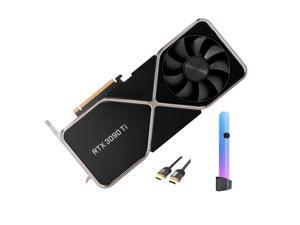

NVIDIA GeForce RTX 3090 Ti Graphics Card Founders Edition 24GB GDDR6X PCI Express 4.0 ...
- Memory Size: 24GB
- Memory Type: GDDR6X
- Cooler: Air Cooler
- Model #: 812674025254
- Item #: 9SIV7KVJPM1834
- Return Policy: Micron Tech Return Policy


ASUS GeForce GTX 1070 Founders Edition, GTX1070-8G
- Core Clock: 1506 MHz
- Max Resolution: 7680 x 4320
- DisplayPort: 3 x DisplayPort
- DVI: 1 x Dual-link DVI-D
- HDMI: 1 x HDMI 2.0
- Card Dimensions (L x H): 10.50" x 4.38"
- Slot Width: 2 Slots
- DirectX: DirectX 12
- Model #: GTX1070-8G
- Item #: 9SIV7KVFDC1355
- Return Policy: Micron Tech Return Policy
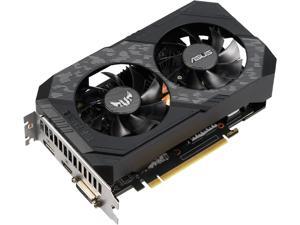
ASUS TUF Gaming GeForce GTX 1660 6GB Dual-fan Edition HDMI DP DVI Gaming Graphics Card ...
- Core Clock: OC Mode: 1560 MHz Gaming Mode: 1530 MHz
- Max Resolution: 7680 x 4320
- DisplayPort: 1 x DisplayPort 1.4
- DVI: 1 x DL-DVI-D
- HDMI: 1 x HDMI 2.0b
- Card Dimensions (L x H): 8.10" x 4.80"
- Slot Width: 2.3 slot
- Chipset Manufacturer: NVIDIA
- Model #: TUF-GTX1660-6G-GAMIN
- Item #: 9SIV7KVFDC0308
- Return Policy: Micron Tech Return Policy
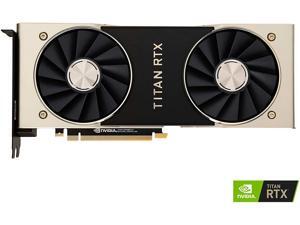
NVIDIA Titan RTX Graphics Card
- Parts: 30 days warranty
- Labor: 30 days warranty
- Model #: 901740686335-1
- Item #: 9SIV7KVFDC2288
- Return Policy: Micron Tech Return Policy
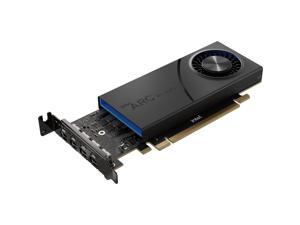

HP Intel Arc Pro A40 6GB GDDR6 Graphic Card 6E3Y8AA
- Brand: HP
- Memory Type: GDDR6
- Model #: 6E3Y8AA
- Item #: 9SIV7KVKMP6237
- Return Policy: Micron Tech Return Policy

ASUS GeForce GTX 1080 Ti 11GB GDDR5X PCI Express 3.0 SLI Support Graphics Card ...
- Core Clock: 1480 MHz
- Max Resolution: 7680 x 4320
- DisplayPort: 2 x DisplayPort 1.4
- HDMI: 2 x HDMI 2.0
- Card Dimensions (L x H): 10.50" x 4.38"
- Slot Width: 2 Slots
- DirectX: DirectX 12
- Chipset Manufacturer: NVIDIA
- Model #: TURBO-GTX1080TI-11G
- Item #: 9SIV7KVFDC1228
- Return Policy: Micron Tech Return Policy
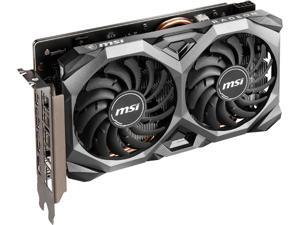

MSI Radeon RX 5500 XT 8GB GDDR6 PCI Express 4.0 Video Card Radeon RX 5500 XT MECH 8G ...
- Core Clock: 1647 MHz
- Max Resolution: 7680 x 4320
- DisplayPort: 3 x DisplayPort 1.4
- HDMI: 1 x HDMI 2.0b
- Card Dimensions (L x H): 8.46" x 5.04"
- DirectX: DirectX 12
- Chipset Manufacturer: AMD
- Brand: MSI
- Model #: RadeonRX5500XTMECH8G
- Item #: 9SIV7KVKEN1196
- Return Policy: Micron Tech Return Policy
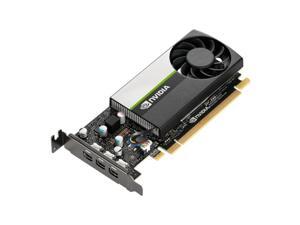
PNY NVIDIA Quadro T400 4GB GDDR6 Graphics Card
- Brand: PNY
- Memory Type: GDDR6
- Model #: VCNT400-4GB-SB
- Item #: 9SIV7KVJNH7241
- Return Policy: Micron Tech Return Policy
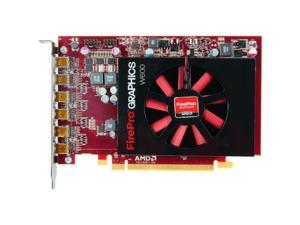

Sapphire FirePro W600 Graphic Card - 750 MHz Core - 2 GB GDDR5 - PCI Express 3.0 x16 - ...
- Core Clock: 750 MHz
- DisplayPort: Yes
- Chipset Manufacturer: AMD
- Brand: SAPPHIRE
- Interface: PCI Express 3.0 x16
- GPU: W600
- Memory Size: 2GB
- Memory Type: SDRAM
- Model #: 31004-28-40R
- Item #: 9SIV7KVFDC2648
- Return Policy: Micron Tech Return Policy
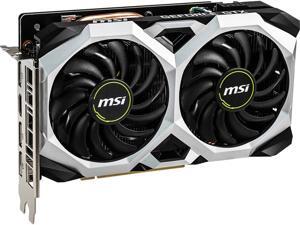
MSI GeForce GTX 1660 Ti 6GB GDDR6 PCI Express 3.0 x16 Graphics Card GTX 1660 TI VENTUS ...
- Max Resolution: 7680 x 4320
- DisplayPort: 3 x DisplayPort 1.4a
- HDMI: 1 x HDMI 2.0b
- Card Dimensions (L x H): 9.09" x 5.00"
- Slot Width: 2 Slots
- DirectX: DirectX 12
- Chipset Manufacturer: NVIDIA
- Brand: MSI
- Model #: GTX 1660 TI VENTUS6G
- Item #: 9SIV7KVJXB6770
- Return Policy: Micron Tech Return Policy

ASUS GeForce GTX 1660 Super Overclocked 6GB Dual-fan EVO Edition VR Ready HDMI ...
- Core Clock: 1530 MHz
- Max Resolution: 7680 x 4320
- DisplayPort: 1 x DisplayPort 1.4
- DVI: 1 x DVI-D
- HDMI: 1 x HDMI 2.0b
- Card Dimensions (L x H): 9.50" x 5.10"
- Slot Width: 2.7 Slot
- DirectX: DirectX 12
- Model #: DUALGTX1660S-O6G-EVO
- Item #: 9SIV7KVFDC1732
- Return Policy: Micron Tech Return Policy
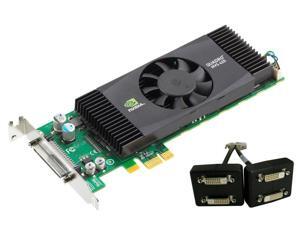
PNY Quadro NVS 420 Graphics Card
- Model #: -001QFYCNY
- Item #: 9SIV7KVFDC3077
- Return Policy: Micron Tech Return Policy
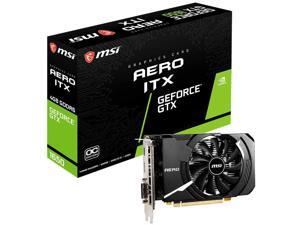
MSI Gaming GeForce GTX 1650 128-Bit HDMI/DP/DVI 4GB GDRR6 HDCP Support DirectX 12 VR ...
- Model #: 727880299415-5
- Item #: 9SIV7KVFDC0207
- Return Policy: Micron Tech Return Policy
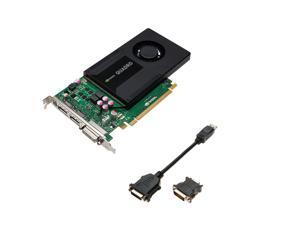
PNY NVIDIA Quadro K2000 2GB GDDR5 128-bit PCI Express 2.0 X16 DisplayPort
- DVI: 1 x DVI
- DirectX: DirectX 11
- Chipset Manufacturer: NVIDIA
- Interface: PCI Express 2.0 x16
- Memory Size: 2GB
- Memory Interface: 128-Bit
- Memory Type: GDDR5
- OpenGL: OpenGL 4.4
- Model #: 085A0349590312
- Item #: 9SIV7KVFDC0883
- Return Policy: Micron Tech Return Policy

PNY GeForce GTX 980 4GB CG EDITION, VCGGTX9804XPB-CG
- Core Clock: 1126 MHz
- Max Resolution: 4096 x 2160
- DisplayPort: 3 x DisplayPort
- DVI: 1 x DVI
- HDMI: 1 x HDMI
- Card Dimensions (L x H): 10.5" x 4.376"
- Slot Width: 2 Slots
- DirectX: DirectX 12
- Model #: VCGGTX9804XPB-CG
- Item #: 9SIV7KVFDC1364
- Return Policy: Micron Tech Return Policy
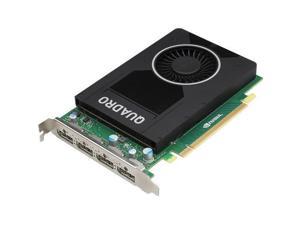
PNY Quadro M2000 Graphic Card - 4 GB GDDR5 - PCI Express 3.0 x16 - Single Slot S
- DirectX: DirectX 12
- Chipset Manufacturer: NVIDIA
- Interface: PCI Express 3.0 x16
- CUDA Cores: 768 Cores
- Memory Size: 4GB
- Memory Interface: 128-Bit
- Memory Type: GDDR5
- OpenGL: OpenGL 4.5
- Model #: TTIVDO74
- Item #: 9SIV7KVFDC3801
- Return Policy: Micron Tech Return Policy
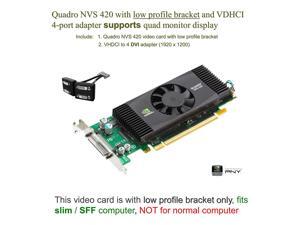
PNY Quadro NVS 420 PCI-Express x 16 with VHDCI to Quad DVI Port Adapter
- Model #: -004LPC6S4
- Item #: 9SIV7KVFDC2788
- Return Policy: Micron Tech Return Policy
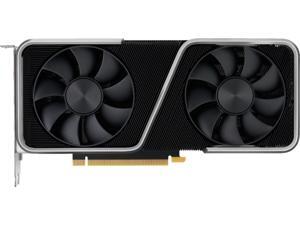
NVIDIA GeForce RTX 3060 Ti Founders Edition 8GB
- Brand: NVIDIA
- Memory Type: GDDR6
- Model #: NVIDIA GeForce RTX 3060 Ti Founders
- Item #: 9SIV7KVJEK6479
- Return Policy: Micron Tech Return Policy
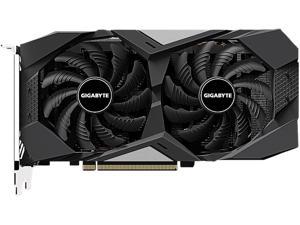

GIGABYTE GeForce GTX 1650 SUPER WINDFORCE OC 4G Graphics Card, 2 x WINDFORCE Fans, ...
- Core Clock: 1755 MHz
- Max Resolution: 7680 x 4320 @ 60 Hz
- DisplayPort: 1 x DisplayPort 1.4
- DVI: 1 x DVI-D
- HDMI: 1 x HDMI 2.0b
- Card Dimensions (L x H): 8.86" x 4.69"
- Slot Width: 2 Slots
- DirectX: DirectX 12
- Model #: GV-N165SWF2OC-4GD
- Item #: 9SIV7KVJXB6691
- Return Policy: Micron Tech Return Policy

MSI GeForce GTX 1080 Ti FE 11GB GDDR5X PCI Express 3.0 x16 SLI Support Graphics Card GTX ...
- Core Clock: 1480 MHz
- Max Resolution: 7680 x 4320
- DisplayPort: 3 x DisplayPort 1.4
- HDMI: 1 x HDMI 2.0
- Slot Width: 2 Slots
- DirectX: DirectX 12
- Chipset Manufacturer: NVIDIA
- Brand: MSI
- Model #: GTX1080Ti FE Edition
- Item #: 9SIV7KVFDC0838
- Return Policy: Micron Tech Return Policy
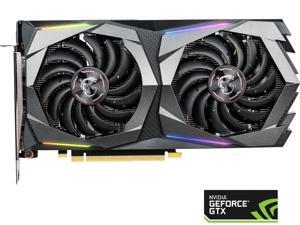
MSI GeForce GTX 1660 Ti 6GB GDDR6 PCI Express 3.0 x16 Graphics Card GTX 1660 TI GAMING X ...
- Max Resolution: 7680 x 4320
- DisplayPort: 3 x DisplayPort 1.4
- HDMI: 1 x HDMI 2.0b
- Card Dimensions (L x H): 9.72" x 5.00"
- DirectX: DirectX 12
- Chipset Manufacturer: NVIDIA
- Brand: MSI
- Interface: PCI Express 3.0 x16
- Model #: GTX1660TiGAMING X 6G
- Item #: 9SIV7KVFDC0203
- Return Policy: Micron Tech Return Policy

ASUS Radeon HD 6870 1GB GDDR5 PCI Express 2.1 x16 CrossFireX Support Graphics Card ...
- Core Clock: 915MHz
- Max Resolution: 2560 x 1600
- DisplayPort: 2 x DisplayPort
- DVI: 2 x DVI
- Card Dimensions (L x H): 11" x 5"
- DirectX: DirectX 11
- Chipset Manufacturer: AMD
- Brand: ASUS
- Model #: EAH6870 DC/2DI2S/1GD
- Item #: 9SIV7KVFDC1584
- Return Policy: Micron Tech Return Policy

EVGA GeForce GTX 1070 Founders Edition, 08G-P4-6170-KR, 8GB GDDR5, LED, DX12 OSD ...
- Core Clock: 1506 MHz
- Max Resolution: 7680 x 4320
- DisplayPort: 3 x DisplayPort 1.4
- DVI: 1 x Dual-Link DVI-D
- HDMI: 1 x HDMI 2.0b
- Card Dimensions (L x H): 10.50" x 4.38"
- Slot Width: 2 Slots
- DirectX: DirectX 12
- Model #: 08G-P4-6170-KR
- Item #: 9SIV7KVFDC1118
- Return Policy: Micron Tech Return Policy
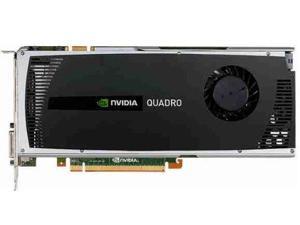
NVIDIA Quadro 4000 by PNY 2GB GDDR5 PCI Express Gen 2 x16 DVI-I DL, Dual DisplayPort and ...
- Model #: 7-9C003X26T70
- Item #: 9SIV7KVFDC2901
- Return Policy: Micron Tech Return Policy
Key Terms for Graphics Cards
Introduction
One of the most basic functions of a graphics card is to output content to a display. However, graphics cards can vary greatly in regards to performance and capabilities. Because there are so many different types of video cards with various specifications and technologies, finding the ideal one can be a challenge. To aid you in your search, NeweggBusiness defines several key terms and technologies.
Key Terms and Technologies
Interface
A graphics card’s interface refers to the type of expansion slot that it is compatible with. There are several expansion slot standards that are commonly found on graphics cards, including PCI Express® (PCIe) 2.0, PCI Express 2.1, PCI Express 3.0, and AGP. Amongst those standards, the latest and fastest is PCI Express 3.0 while the oldest is AGP.
Ports
The ports available on the rear panel of a graphics card dictate what type of devices can be connected to it. Some of the most commonly supported ports include VGA, DVI, DisplayPort, and HDMI™. Many have multiple ports and are able to output to them simultaneously, which allows users to have multiple monitor setups.
Graphics Processing Unit (GPU)
Early desktop computers utilized the CPU to perform calculations required for rendering images. In modern computers however, that task can be performed by a GPU. In comparison to a CPU, a GPU is more efficient at and better suited for rendering images. Every graphics card features an onboard GPU, with some higher-end cards having two.
GPU Clock Speed
Similar to a CPU, a GPU also has a core clock that indicates how quickly it can perform calculations. It is usually measured in either megahertz or gigahertz. Generally, a faster GPU clock is better but it should not be the most important determining factor in your purchasing decision.
Memory
A graphics card’s onboard memory is the component that stores image data such as textures. A GPU utilizes video RAM (VRAM) to store frequently accessed data, similar to how a CPU utilizes system RAM. This means that a larger VRAM capacity will allow you store more texture data.
Memory Clock Speed
A video card’s memory clock speed will tell you how quickly the GPU can transfer and read data stored in the VRAM. For certain applications, the speed of VRAM is more important than the amount of VRAM.
SLI™ / CrossFire™
Both SLI and CrossFire are technologies that allow you to use multiple video cards simultaneously for improved graphics performance, provided that your motherboard supports it. In a SLI or CrossFire setup, multiple GPUs share the workload to render graphics. To maximize performance, you should utilize multiple graphics cards in a SLI or CrossFire configuration.