
- Home
- >Computer Hardware
- >Motherboard
- >Intel Motherboards
Intel Motherboards - Showing 1777 - 1783 of 1783 Products
Narrow Results
NARROW RESULTS
CPU Socket Type
CPU Type
Chipset
Form Factor
Memory Standard
Number of Memory Slots
Maximum Memory Supported
Memory Performance Profile
Sold by
Back I/O Ports
Serial ATA (SATA)
SATA RAID
M.2
PCI Express 5.0 x16
PCI Express 4.0 x16
PCI Express 3.0 x16
PCI Express 2.0 x16
PCI Express x16
PCI Slots
Mini Card Slots
Windows 11
Max LAN Speed
Wireless LAN
Audio Channels
Intel Optane Ready
Compatible CPU Cooler
Brands
All Top Brands
Availability
Condition
Price
Discount
Useful Links
Shipping Options
Warranty
Customer Ratings


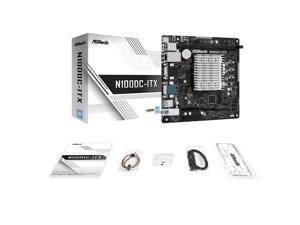

ASRock N100DC-ITX - Intel Quad-Core Processor N100 (Up to 3.4 GHz) DDR4- 2 SATA3, ...
- Memory Standard: Supports DDR4 non-ECC, un-buffered memory up to 3200* * Please refer to Memory Support List on ASRock's website for more information. (http://www.asrock.com/) - Max. capacity of system memory: 32GB
- Number of Memory Slots: 1 x DDR4 DIMM Slot
- PCI Express x16: 1 x PCIe 3.0 x4 Slot (PCIE1), supports x2 mode* - 1 x M.2 Socket (Key E), supports type 2230 Intel® CNVio (Integrated WiFi/BT) * Supports NVMe SSD as boot disks
- Brand: ASRock
- CPU Socket Type: - Intel Quad-Core Processor N100 (Up to 3.4 GHz) - Supports Intel® Turbo Boost Technology
- Form Factor: Mini ITX
- Serial ATA (SATA): 2 x SATA3 6.0 Gb/s Connectors Supports NVMe SSD as boot disks
- CPU Type: Intel® Quad-Core Processor N100 (Up to 3.4 GHz) - Supports Intel® Turbo Boost Technology
- Model #: N100DC-ITX
- Item #: 9B-13-162-133
- Return Policy: Standard Return Policy
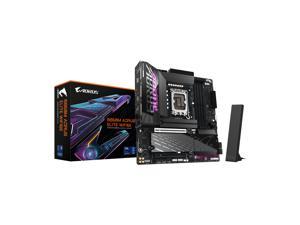

GIGABYTE B860M AORUS ELITE WIFI6E Intel Core Ultra (Series 2) LGA 1851 Motherboard, ...
- Memory Standard: DDR5 5600 / DDR5 6400 / DDR5 6600 / DDR5 6800 / DDR5 7000 / DDR5 7200 / DDR5 7400 / DDR5 7600 / DDR5 7800 / DDR5 7900 / DDR5 7950 / DDR5 8000 / DDR5 8200 / DDR5 8266 / DDR5 8400 / DDR5 8600 / DDR5 8800 / DDR5 9200
- Number of Memory Slots: 4x288pin (DDR5)
- Brand: GIGABYTE
- CPU Socket Type: LGA 1851
- Chipset: Intel B860
- Form Factor: Micro ATX
- Serial ATA (SATA): 4 x SATA 6Gb/s
- PCI Express 5.0 x16: CPU: - 1 x PCI Express x16 slot, supporting PCIe 5.0 and running at x16 (PCIEX16) * The PCIEX16 slot can only support a graphics card or an NVMe SSD. If only one graphics card is to be installed, be sure to install it in the PCIEX16 slot.
- Model #: B860M A ELITE WIFI6E
- Item #: 9B-13-145-558
- Return Policy: Standard Return Policy
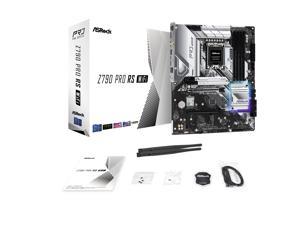
ASRock PRO Z790 PRO RS WiFi Intel LGA1700 (14th,13th,12th Gen) ATX Motherboard, 4 ...
- Memory Standard: Supports DDR5 non-ECC, un-buffered memory up to 6800+(OC)* 1DPC 1R Up to 6800+ MHz (OC), 4800 MHz Natively. 1DPC 2R Up to 6000+ MHz (OC), 4400 MHz Natively. 2DPC 1R Up to 5600+ MHz (OC), 4000 MHz Natively. 2DPC 2R Up to 4800+ MHz (OC), 3600 MHz Natively. - Max. capacity of system memory: 128GB - Supports Intel® Extreme Memory Profile (XMP) 3.0 * Please refer to Memory Support List on ASRock's website for more information. (http://www.asrock.com/
- Number of Memory Slots: 4x288pin (DDR5)
- Audio Chipset: 7.1 CH HD Audio (Realtek ALC897 Audio Codec) - Nahimic Audio
- Brand: ASRock
- CPU Socket Type: LGA 1700
- Chipset: Intel Z790
- Form Factor: ATX
- Serial ATA (SATA): 8 x SATA 6Gb/s
- Model #: Z790 PRO RS WIFI
- Item #: 9B-13-162-102
- Return Policy: Standard Return Policy
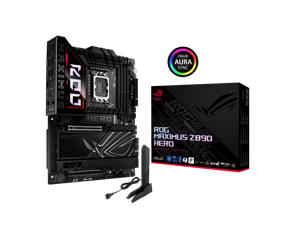

ASUS ROG MAXIMUS Z890 HERO Intel® Z890 LGA 1851 ATX motherboard, Advanced AI ...
- Memory Standard: DDR5 4400 / DDR5 4800 / DDR5 5000 / DDR5 5200 / DDR5 5400 / DDR5 5600 / DDR5 5800 / DDR5 6000 / DDR5 6200 / DDR5 6400 / DDR5 6600 / DDR5 6800 / DDR5 7000 / DDR5 7200 / DDR5 7400 / DDR5 7600 / DDR5 7800 / DDR5 7900 / DDR5 7950 / DDR5 8000 / DDR5 8200 / DDR5 8266 / DDR5 8400 / DDR5 8600 / DDR5 8666 / DDR5 8800 / DDR5 8933 / DDR5 9000 / DDR5 9066 / DDR5 9200
- Number of Memory Slots: 4x288pin (DDR5)
- Brand: ASUS
- CPU Socket Type: LGA 1851
- Chipset: Intel Z890
- Form Factor: ATX
- Serial ATA (SATA): 4 x SATA 6Gb/s
- PCI Express 5.0 x16: Intel Core Ultra Processors (Series 2)* 1 x PCIe 5.0 x16 slot (supports x16 or x8/x4/x4 modes)** ** When M.2_3 or M.2_4 is enabled, PCIEX16(G5) will run x8 only.
- Model #: ROG MAXIMUS Z890 HERO
- Item #: 9B-9UB13-119-691
- Return Policy: Standard Return Policy
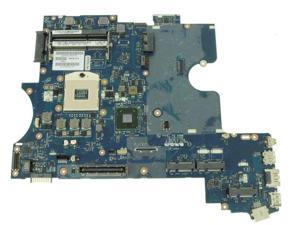

Refurbished: Dell OEM Latitude E6520 Laptop Motherboard System Mainboard Motherboard ...
- Brand: DELL
- CPU Type: computer-motherboards
- Model #: FFR5G
- Item #: 9SIV1FGB026099
- Return Policy: Parts-People - Dell Parts Experts Return Policy
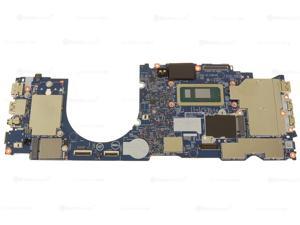
Refurbished: Dell OEM Latitude 5340 Motherboard System Board Intel i5 Up Motherboard ...
- Brand: DELL
- CPU Type: computer-motherboards
- Model #: 2D8T7
- Item #: 9SIV1FGKER2048
- Return Policy: Parts-People - Dell Parts Experts Return Policy
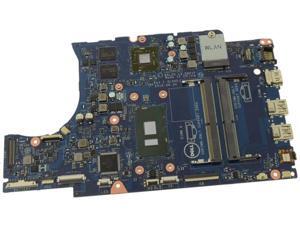
Refurbished: Dell OEM Inspiron 5567 and Inspiron 5767 Motherboard System Motherboard ...
- Brand: DELL
- CPU Type: computer-motherboards
- Model #: KFWK9
- Item #: 9SIV1FGKCU7242
- Return Policy: Parts-People - Dell Parts Experts Return Policy
Intel Motherboard Questions and Answers
Introduction
A compatible Intel® motherboard is an essential component when assembling a desktop with an Intel processor. The motherboard determines what type of processor you can use, how many data storage drives you can install, the maximum amount of system memory supported, and more. To help you find the ideal Intel motherboard for your desktop build, NeweggBusiness answers several common questions about motherboards.
Questions
What is a motherboard chipset?
A motherboard chipset is a collection of components on the motherboard designed to integrate the processor with the rest of the system hardware. The chipset has a major impact on overall system performance and device compatibility. For each family of Intel processors, a different chipset is typically used. When shopping for an Intel motherboard, you will have to ensure that its chipset is compatible with the processor you intend to use.
What does CPU socket type mean?
The CPU socket is the component on the motherboard that holds and locks the processor in place. In order for a processor to be installed onto a motherboard, they both must have the same socket type. For example, an LGA 1150 processor can only be installed onto an Intel motherboard with a LGA 1150 socket.
However, having the same socket type does not necessarily mean that the processor and motherboard are compatible. Sometimes, multiple generations of processors can have the same socket type but use different chipsets.
What is the difference between PCI and PCIe®?
Both PCI and PCIe are computer expansion card standards that are used by devices such as video cards, sound cards, network adapters, and more. PCIe is a newer standard designed to replace PCI and is not backwards compatible. It is capable of faster data transfer rates, which allows for better performance from expansion cards.
Many ATX form factor Intel motherboards will have a combination of both PCI and PCIe expansion slots. Unfortunately, some motherboards—mainly small form factor motherboards such as Mini ITX—only have one PCIe slot due to space limitations.
What is BIOS?
It is an acronym that stands for Basic Input/Output System and is the very first program that starts when a computer is powered on. Stored on the motherboard, BIOS is the intermediary that interconnects the components and launches the operating system. The interface for BIOS is rather limited because it is mainly text based with a small color palette. Many motherboards include BIOS, though there is now a transition to the newer Unified Extensible Firmware Interface (UEFI).
What is UEFI?
Like BIOS, UEFI is an intermediary for the main operating system and the hardware. It is designed to replace BIOS as the standard operating system included on AMD and Intel motherboards. Compared to BIOS, UEFI is much more user friendly and secure, supports larger hard drives, reduces startup times, and more. Many new Intel motherboards now include UEFI instead of BIOS, though such motherboards may sometimes be advertised as having UEFI BIOS.