
Speaker - Showing 1033 - 1039 of 1039 Products
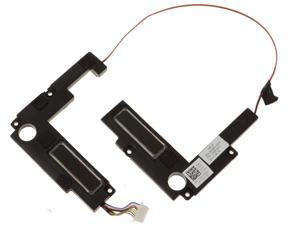

Refurbished: Dell TJXHY (Dell 023.400BD.0001) Left and Right Speaker Set - Black - 2 Watts / ...
- Type: Type
- Model #: TJXHY
- Item #: 9SIV02WKKY3531
- Return Policy: Tech For Less Return Policy
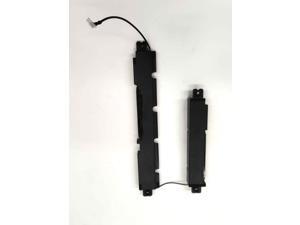
Refurbished: Dell C55RF (Dell 04A4-022A0DE) Left and Right Speaker Assembly For ...
- Model #: C55RF
- Item #: 9SIV02WKMA0756
- Return Policy: Tech For Less Return Policy
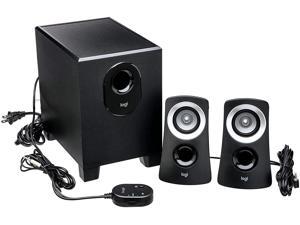

Refurbished: Logitech Z313 Speaker (980-000401)
- Model #: 980-000401
- Item #: 9SIV2G2FJX7904
- Return Policy: PremierSource Return Policy
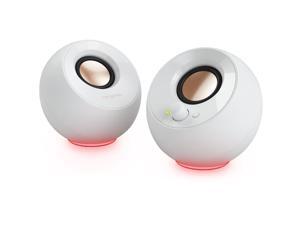
Creative Labs Pebble SE 2.0 Desktop Speakers - 4.40 W RMS - White
- Model #: 51MF1725AA001
- Item #: 9B-36-116-234
- Return Policy: Standard Return Policy
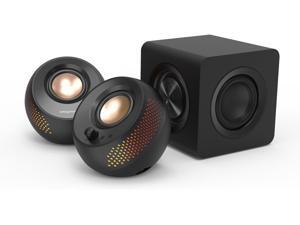
Creative Labs Pebble X Plus 2.1 USB-C Desktop Speakers with Subwoofer, Bluetooth 5.3, RGB ...
- Model #: 51MF0495AA000
- Item #: 9B-36-116-227
- Return Policy: Standard Return Policy
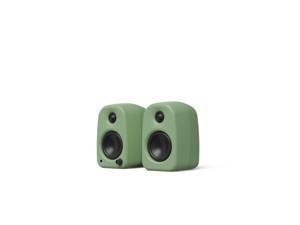
Kanto UKI 100 W Active Desktop Computer Speakers with Bluetooth and USB-C | Intelligent ...
- Parts: Two year manufacturer's warranty
- Labor: Two year manufacturer's warranty
- Model #: UKIDSBN
- Item #: 9SIV17EKW18881
- Return Policy: Walt's TV Return Policy
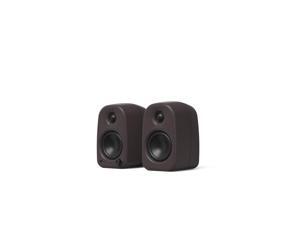
Kanto UKI 100 W Active Desktop Computer Speakers with Bluetooth and USB-C | Intelligent ...
- Parts: Two year manufacturer's warranty
- Labor: Two year manufacturer's warranty
- Model #: UKIDSBB
- Item #: 9SIV17EKW18880
- Return Policy: Walt's TV Return Policy
Tips for Shopping for Computer Speakers
Introduction
When looking at a product description for a set of computer speakers, you will often see a list of terms and specifications. They convey information such as the amount of power the speakers can output, their range of sound reproduction, and more. Below, NeweggBusiness will explain several important terms and specifications to help you get started in choosing a computer speaker system.
Number of Speakers
A computer speaker system’s configuration describes the number of speakers that it has and is shown as a two digit number separated by a decimal. For instance, 2.1 would mean a total of three speakers, one front left, one front right, and one subwoofer. A 5.1 computer speaker system has a total of six speakers, a single center speaker, two front left and right speakers, two rear left and right speakers, and a single subwoofer. Computer speakers that are listed as 5.1, 7.1, or more are considered surround sound speakers.
Power (RMS and Peak)
Power is an important metric you can use to gauge computer speaker performance. It is measured in watts and indicates the amount of power that a speaker can handle. There are two types of power ratings for speakers, RMS and peak power. RMS is the amount of power that can be continuously sent to a computer speaker without it malfunctioning or being damaged. Peak power is the maximum amount of power that it can accept in short bursts.
Generally, a higher power rating means that a speaker can be louder and clearer. If you are utilizing the speakers in a large room for a large audience and need to raise the volume, a higher power rating is beneficial. A theater room with a projector for example, may require speakers with higher power ratings.
Frequency Response
Frequency response is used to describe the range of frequencies that a speaker can reproduce and is measured in hertz (Hz). If a sound card sends a signal that is outside the speaker’s frequency response range, then the computer speaker will not be able to play it. When shopping for computer speakers, you should try to find a set that matches the frequency response of your sound card.
Signal to Noise Ratio (SNR)
The signal to noise ratio of a computer speaker is a measurement of its sound clarity. The higher the SNR is, the less background noise you will be able to hear. If a set of computer speakers have a low SNR rating, you will be able to hear a slight buzz when raising the volume.